
Solida Power 6 kW · Mobile power inverter
Six kilowatts of silence,
wheeled in and carried out.
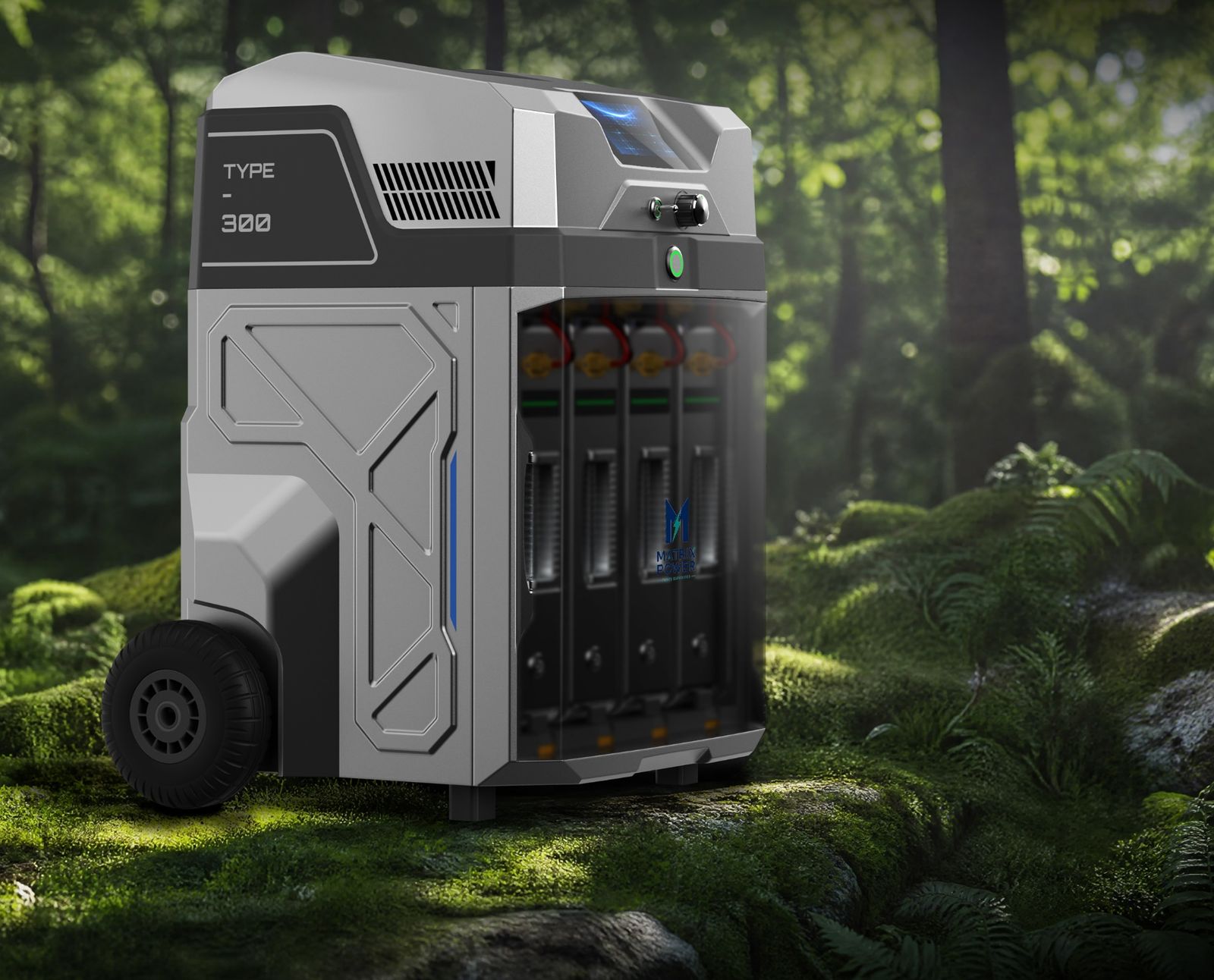
5.9 kWh and 6 kW from one fanless enclosure that rolls on two wheels — and comes apart into four 7.5 kg modules for the last stairwell. The packs with this much energy are 60 kg monoliths with fans. The fanless ones hold a third of it.
- 5.9 kilowatt-hours
- Six kilowatts
- 7.5 kg a module
- No fan
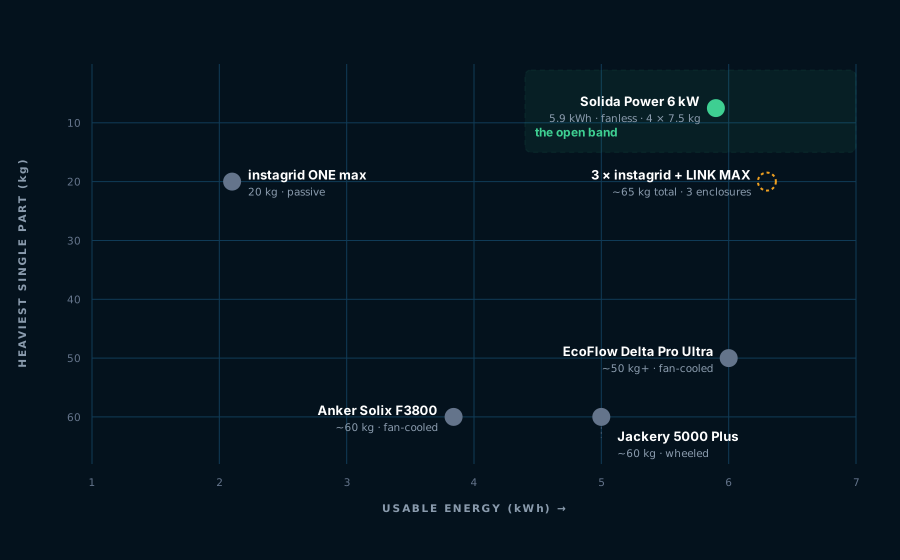
The open band
Energy on one axis. What you have to lift on the other.
Capacity alone is beaten. Silence alone is beaten. Light enough to carry is beaten. Every product at this energy asks you to move one 50–60 kg object, and every product whose heaviest part is light holds a fraction of the energy. That corner of the chart is where this sits.
Modular by design
It rolls. And where rolling stops, it comes apart.
Two 6-inch wheels and a retractable handle get it across a car park, and the design keeps 54 mm of ground clearance while it is being towed. That part is unremarkable — every pack at this energy has wheels.
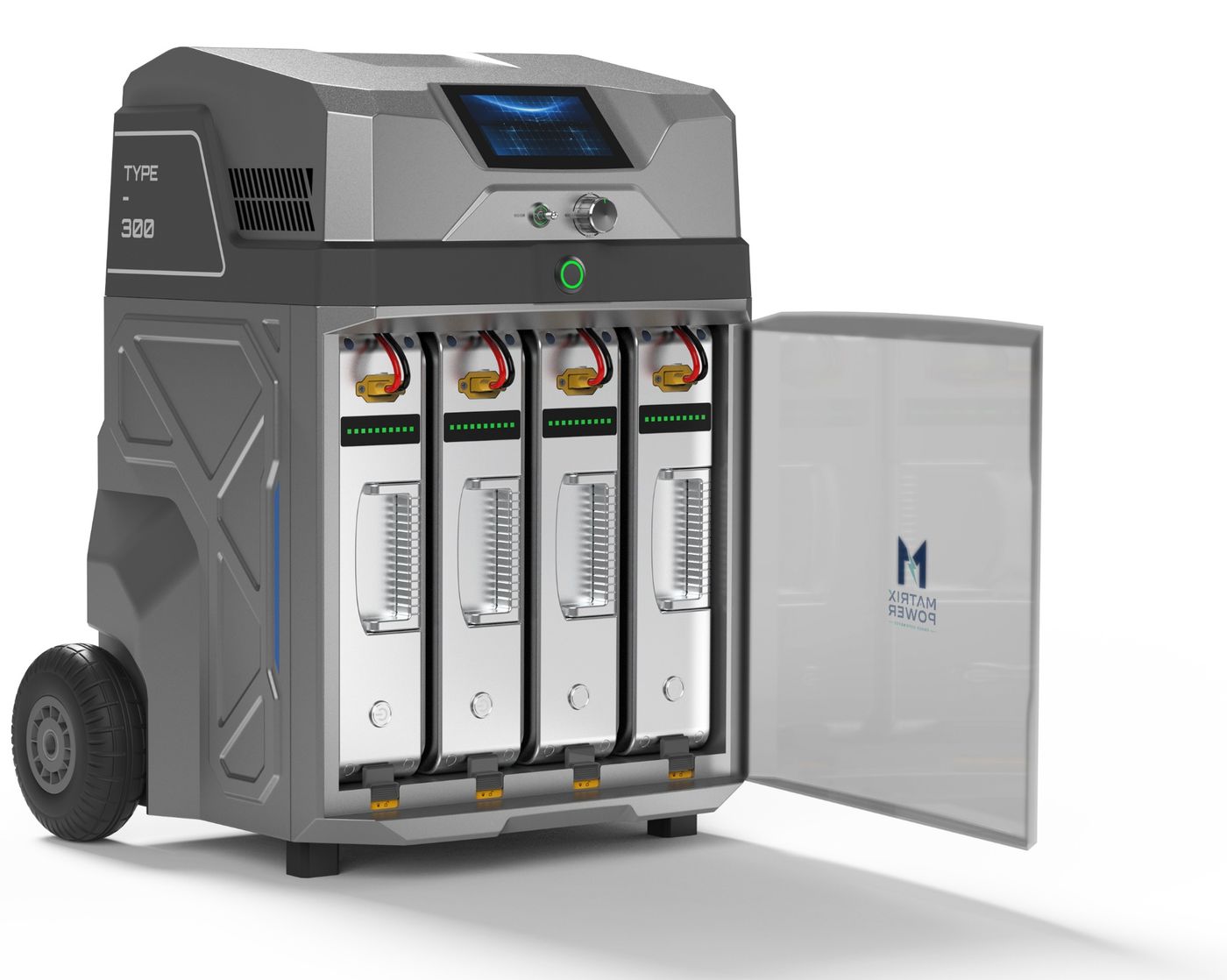
What is different is what happens at the kerb. Open the front door and four 48 V modules come out by hand, 1.48 kWh and 7.5 kg each, so the flooded basement, the stage riser, the scaffold and the ploughed field are four trips rather than two people and a ramp. A sealed 60 kg trolley has no equivalent move.
- Scale capacity by adding modules, at the job, without a different product
- Hot-swap a module mid-shift instead of shutting the system down
- Distribute weight across a team rather than needing a lift gate
- Ship, store and replace one 7.5 kg part, not one 60 kg machine
The phase question
One unit is one phase. Three units are three phases.
A single unit produces single-phase AC — 6 kW across four outlets. That runs most of what a field job actually plugs in, and it is the configuration this campaign is building.
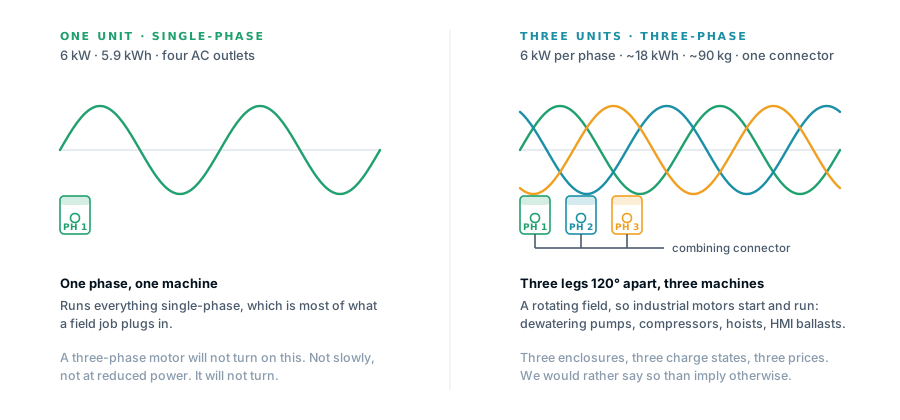
Motors above roughly 2–3 HP are three-phase, and a three-phase motor needs a rotating field, which no single-phase supply can produce. The front panel carries a phase selector for exactly that reason: set three units to phase 1, phase 2 and phase 3, join them with the combining connector, and the set feeds a three-phase load at 6 kW a phase. It costs what it sounds like — three enclosures, roughly 90 kg, about 18 kWh.
xPowerOS distributed inverting
Four battery modules, four inverters, one synchronised output.
Each 48 V battery independently powers its own inverter module. xPowerOS synchronises and coordinates those individual AC outputs, digitally synthesising them into one line-voltage AC supply. There is no centralised high-current 48 V DC bus anywhere in the system.
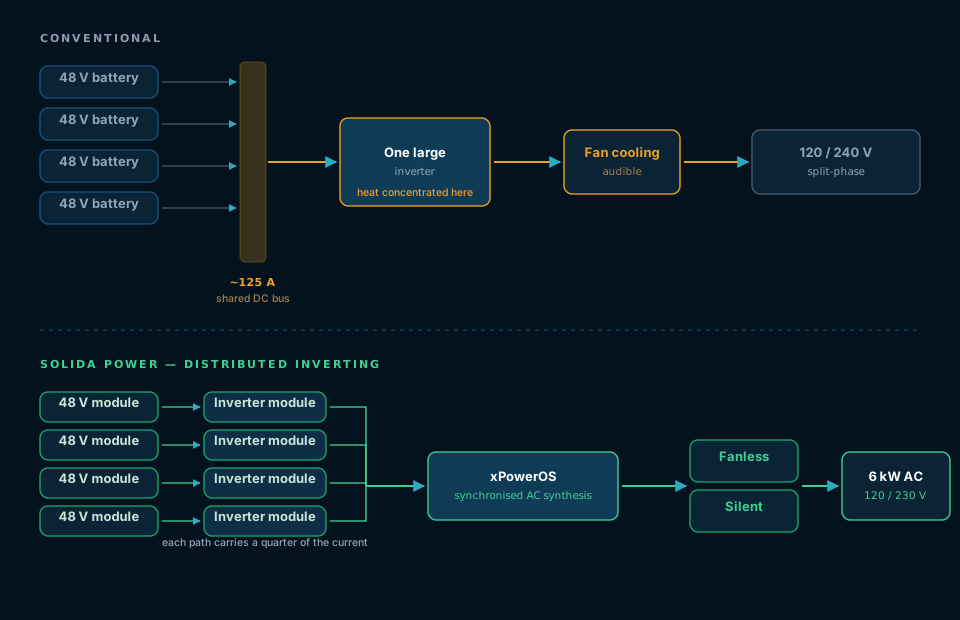
No high-current DC bus
At 6 kW a conventional 48 V architecture needs roughly 125 A at ideal conditions, and realistically more at full load. Distributing conversion cuts what each branch has to carry to a fraction of that.
Fanless, passively cooled, silent
Every real converter has losses — at 98% efficiency a 6 kW unit still dissipates around 120 W. Splitting that across four modules gives four times the wall area to shed it through, which is what makes convection alone sufficient.
Fault isolation between modules
Conversion paths are independent. A fault in one battery-and-inverter branch does not take the system with it, which matters more in a field clinic or a storm response than it does in a garage.
Where it goes to work
Nine scenarios, and why we win each one.
Ranked on four things together: does the job genuinely need more than 2 kWh, does silence or emissions-freedom carry real value, is there a budget holder who buys equipment, and how long is the cycle.
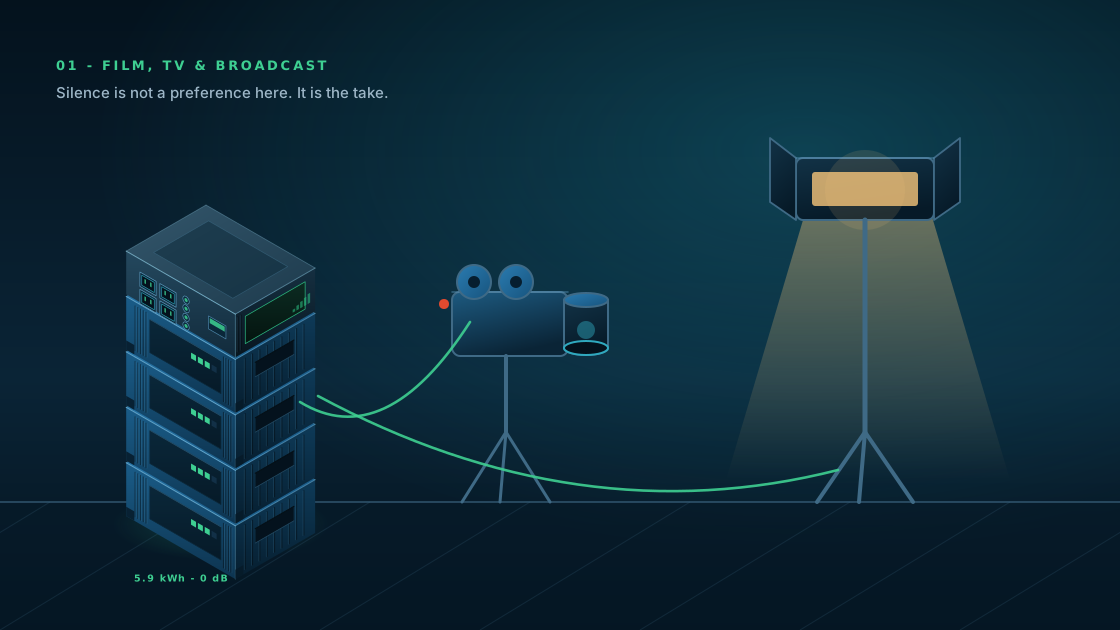
Film, TV & broadcast
Batteries get placed next to talent, where nothing with an engine can go. 5.9 kWh covers a lighting package for a shift, silently, from a unit a grip can wheel onto the floor.
Read the scenario →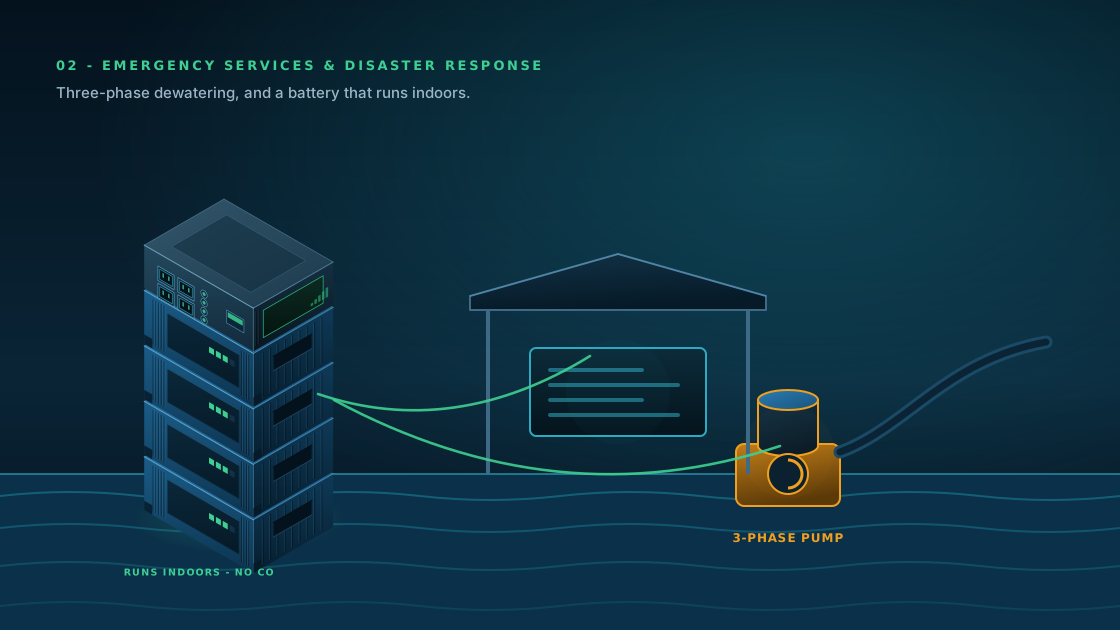
Emergency services & disaster response
Roughly 85 Americans die each year from portable-generator carbon monoxide, and the toll spikes after every hurricane. A fanless battery that runs indoors is a different category of product to a fire chief.
Read the scenario →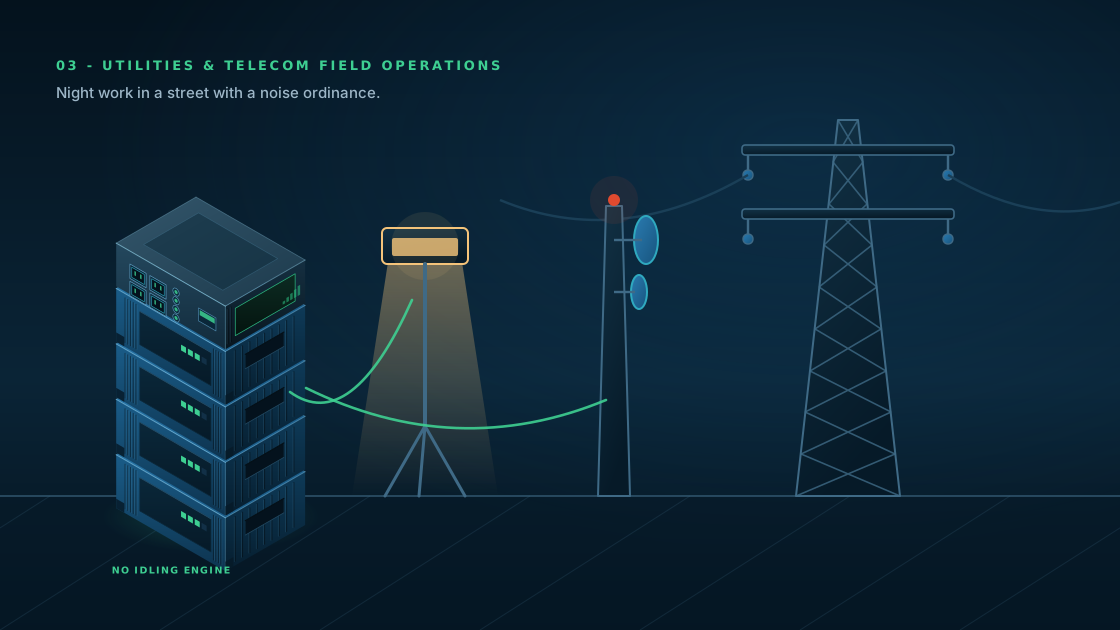
Utilities & telecom field operations
Line crews, substation maintenance, tower service and fibre splicing all run test gear, tools and lighting far from a panel — frequently at night in residential areas where noise ordinances bite.
Read the scenario →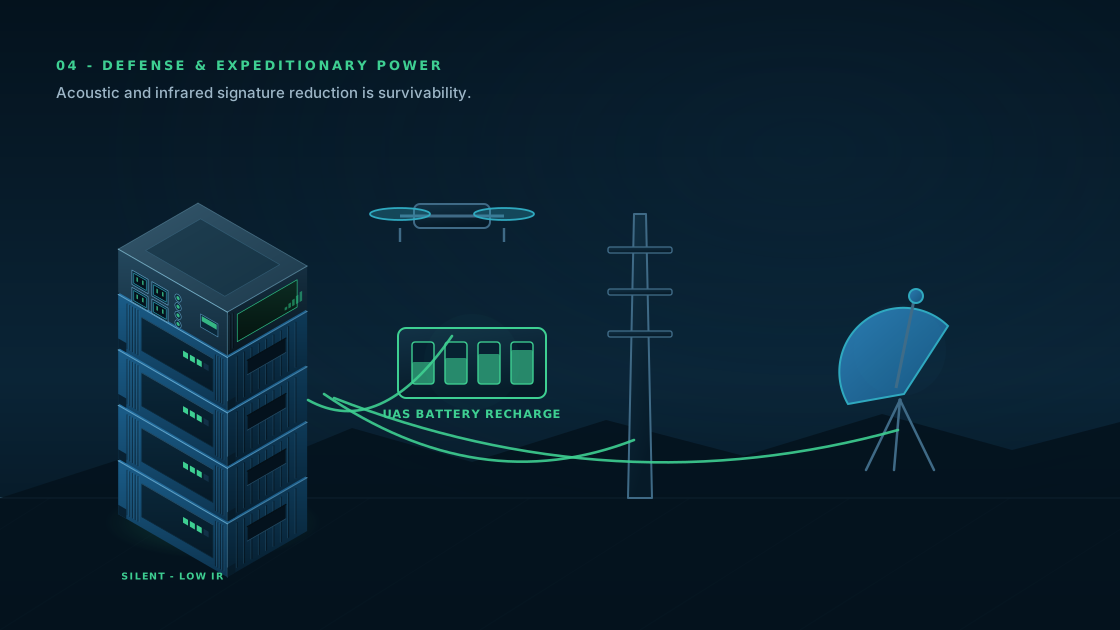
Defense & expeditionary power
The highest margin and the best fit for the underlying physics. Acoustic and infrared signature reduction is survivability, and field recharging of drone batteries is a large, urgent and badly served load.
Read the scenario →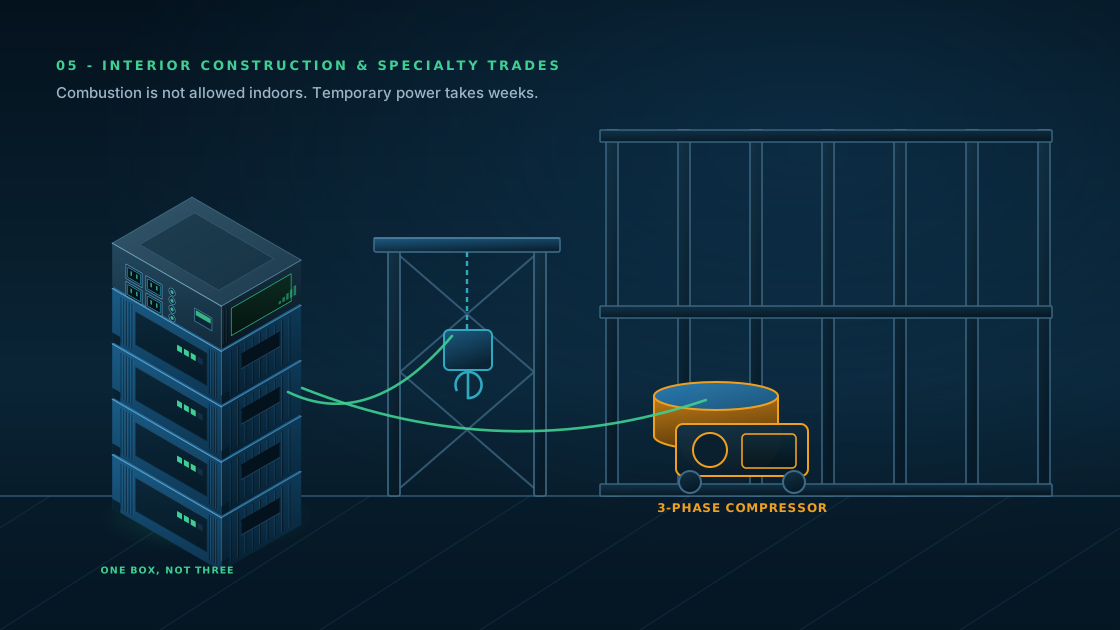
Interior construction & specialty trades
Fit-out and renovation work where an engine simply cannot run, and a temporary power hookup costs thousands and takes weeks to schedule.
Read the scenario →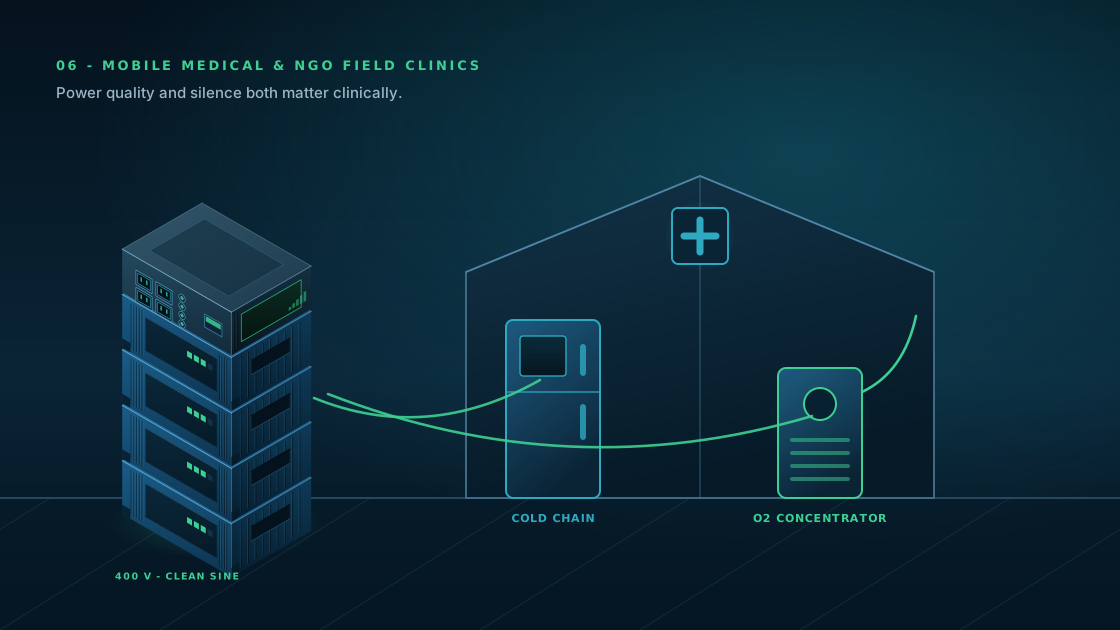
Mobile medical & NGO field clinics
Imaging vans, dental and veterinary units, vaccination drives and field hospitals. The cold chain is the load that cannot be interrupted, and donor-funded buyers purchase in fleets.
Read the scenario →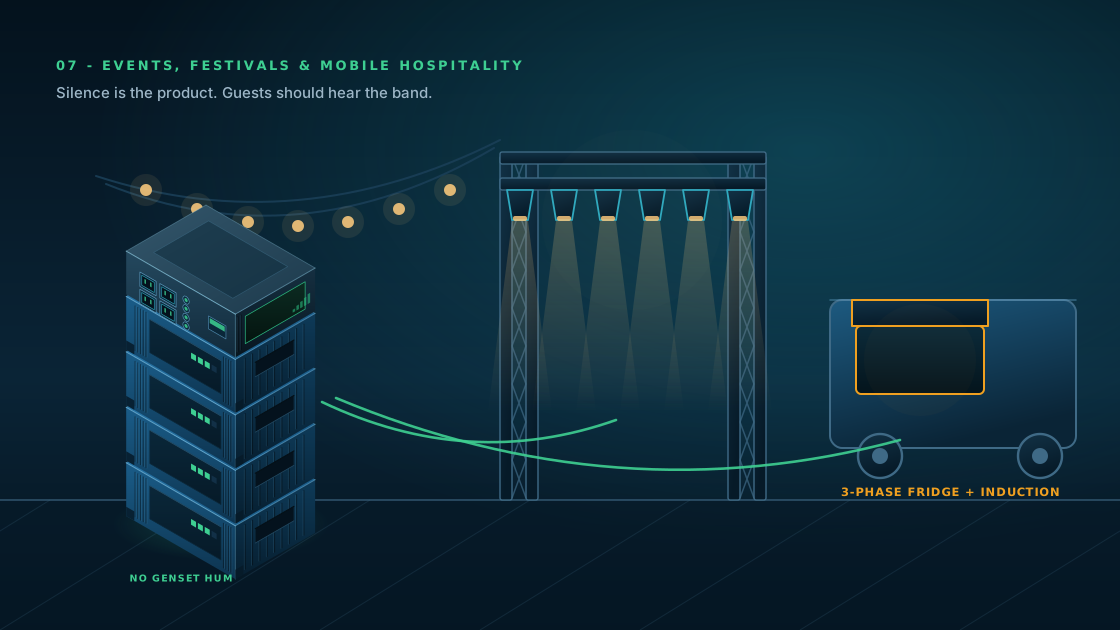
Events, festivals & mobile hospitality
Food trucks, stages, vendor rows and pop-up retail — refrigeration and induction that has to run without an engine behind the crowd. Decisions are fast and the rental channel is the same one film uses.
Read the scenario →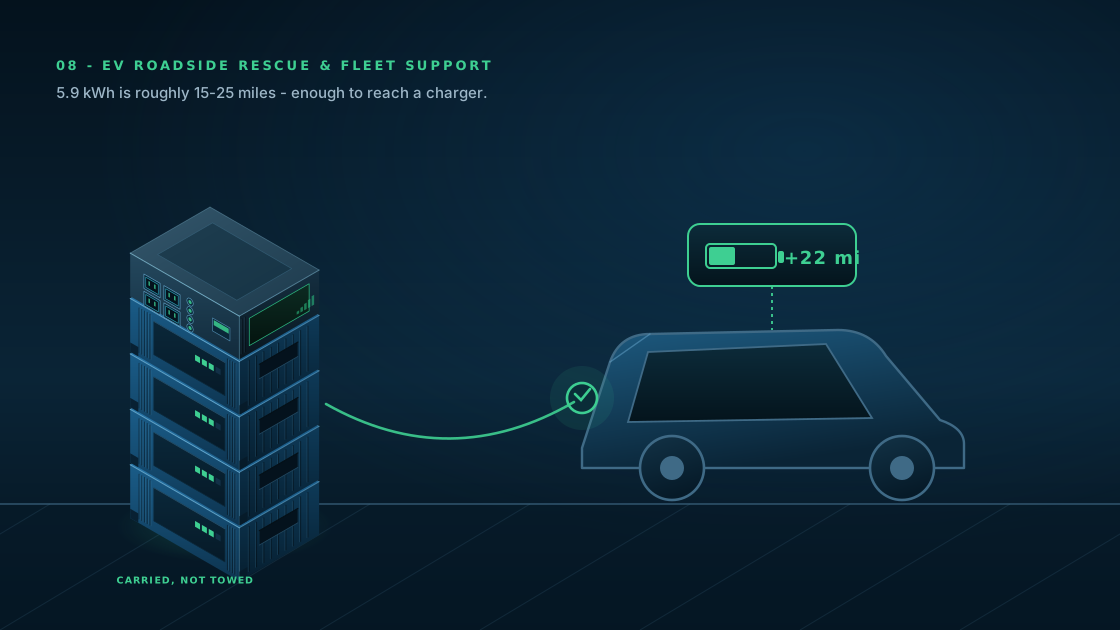
EV roadside rescue & fleet support
5.9 kWh gets a stranded EV to the nearest charger, and the same unit does dealership lot moves and depot yard work without installed infrastructure.
Read the scenario →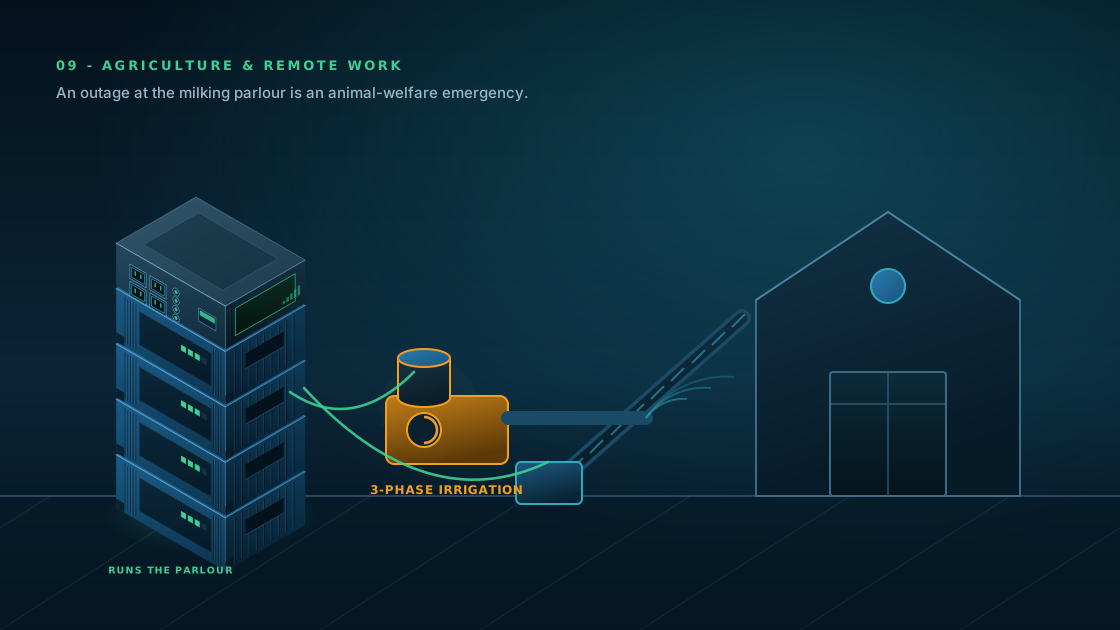
Agriculture & remote work
Irrigation pumps, grain augers, feed mixers and parlour vacuum pumps — motor loads far from a panel, where willingness to pay during an outage is very high.
Read the scenario →On the numbers. Figures on this site are engineering targets for the pre-production unit, not measurements from a certified production sample. Peak and 10-second overload ratings are under test and will be published as measured, because surge headroom — not continuous rating — is what decides whether a motor actually starts. Competitor specifications are vendor-published figures gathered in August 2026. If you are evaluating this for a purchase decision, ask us for the current test data rather than relying on this page.
Talk to us
Tell us what you need to power.
We reply to every serious enquiry within two business days. If you are evaluating this for a fleet, a rental catalogue or a grant application, say so — those conversations get the test data and the paperwork, not a brochure.