
The situation
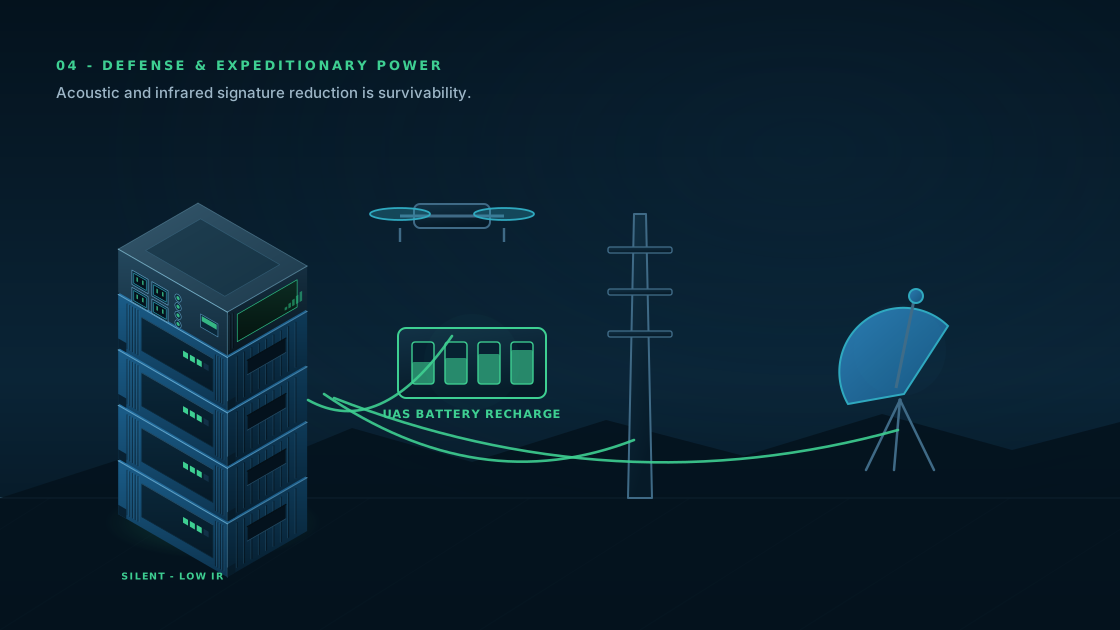
The highest margin and the best fit for the underlying physics. Acoustic and infrared signature reduction is survivability, and field recharging of drone batteries is a large, urgent and badly served load.
Every generator at a forward position is a beacon in two spectra and a reason for a fuel convoy. Eliminating vehicle idling for power is a casualty-reduction argument, and it is the one that moves defense buyers.
- Buyer
- Program offices, SOF units, allied ministries; primes as integrators
- Replaces
- Tactical generators and the fuel convoys that feed them
- Buying cycle
- 18–36 months to program; SBIR money in 6–9
- Where to meet them
- AUSA, SOF Week, Modern Day Marine, Eurosatory; SBIR/STTR, DIU, AFWERX, Army xTech
The loads
What one unit runs, and what takes three
These are the loads this vertical actually runs. Most of them are single-phase and a single unit covers them. The three-phase ones are flagged, and they mean a three-unit set — which is a different quote, a different weight and a different conversation, so ask about them early.
- Silent watch and observation posts — acoustic and thermal signature reduction
- Drone and UAS battery field recharging — a large, urgent and badly served load
- Forward comms, SATCOM terminals and tactical operations centres
- Counter-UAS and electronic warfare systems
- Role 2 field surgical teams and mobile sterilisation
- EOD and demining equipment
- Remote border and perimeter sensor towers
Three-phase takes three units. One unit is a single-phase machine — 6 kW, 5.9 kWh, four AC outlets. Its front panel carries a phase selector, so three units set to phase 1, phase 2 and phase 3 and joined by the combining connector will feed a three-phase load at 6 kW a phase. That is three enclosures, three charge states and roughly 90 kg for about 18 kWh. We say so plainly because an earlier version of this site claimed three-phase came out of a single box, and it does not. The three-unit specification →
Why we are better here
The comparison that decides this job.
What you are living with today
- A tactical generator is audible, hot, and needs fuel delivered by people in vehicles
- Idling a vehicle for power puts an engine signature where you least want one
- Consumer packs are fan-cooled, which puts an audible signature exactly where you do not want one
- A generator brings a maintenance schedule, a parts list and a fuel requirement with it
Solida Power in this scenario
- No fan, no exhaust, no rotating machinery — an acoustic and infrared profile close to ambient
- 230 V single-phase per unit; three units set to phases 1, 2 and 3 feed a 400 V three-phase load
- 7.5 kg modules distribute across a team instead of needing a vehicle
- Fault isolation between modules: losing one leaves the rest of the system working
- Fewer fuel convoys is the argument that gets funded
Going deeper
Non-dilutive money arrives before the purchase order
SBIR/STTR, DIU, AFWERX and Army xTech can fund ruggedisation well before any program of record exists. That is unusual and worth planning around: the qualification work these programmes pay for is the same work every other vertical eventually asks to see.
Plan the compliance gate early
MIL-STD-810 and MIL-STD-461 are the expected environmental and EMI regimes, and ITAR/EAR counsel belongs in the room before any conflict-zone conversation, not after. This vertical has the longest cycle on the list and the least tolerance for surprises.
The honest caveat
Air transport of Class 9 dangerous goods constrains exactly the rapid-deployment scenarios this vertical cares about. Work the shipping-at-reduced-state-of-charge path first; the first logistics officer you meet will ask.
Every scenario page carries one. If we cannot name the weakness in a use case, we do not understand it well enough to sell into it.
Keep reading
Other scenarios
Film, TV & broadcast
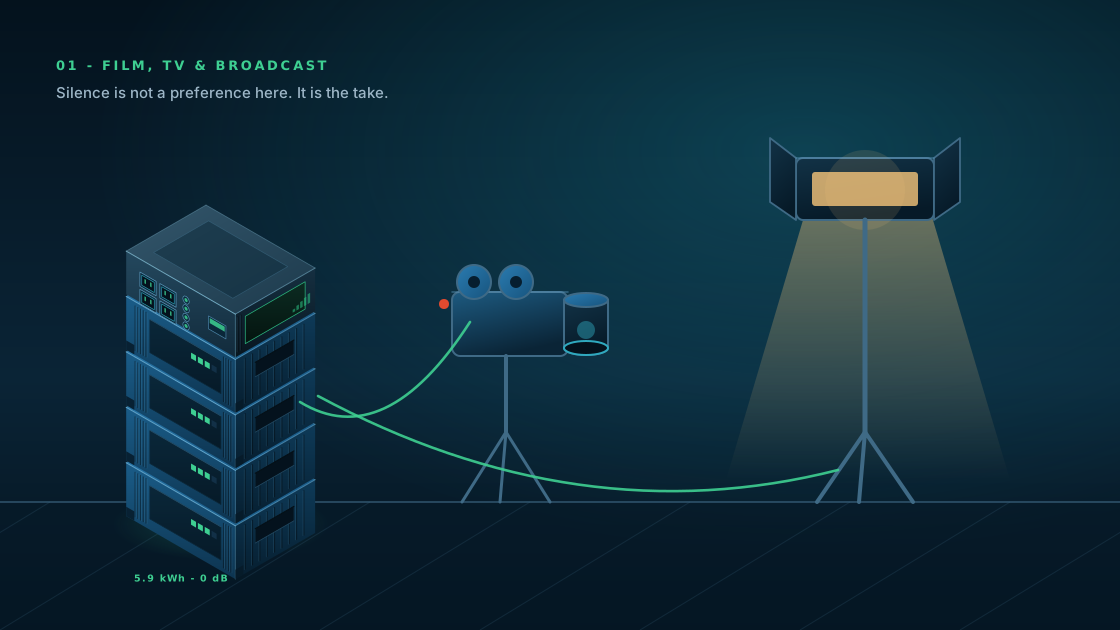
Batteries get placed next to talent, where nothing with an engine can go. 5.9 kWh covers a lighting package for a shift, silently, from a unit a grip can wheel onto the floor.
Read the scenario →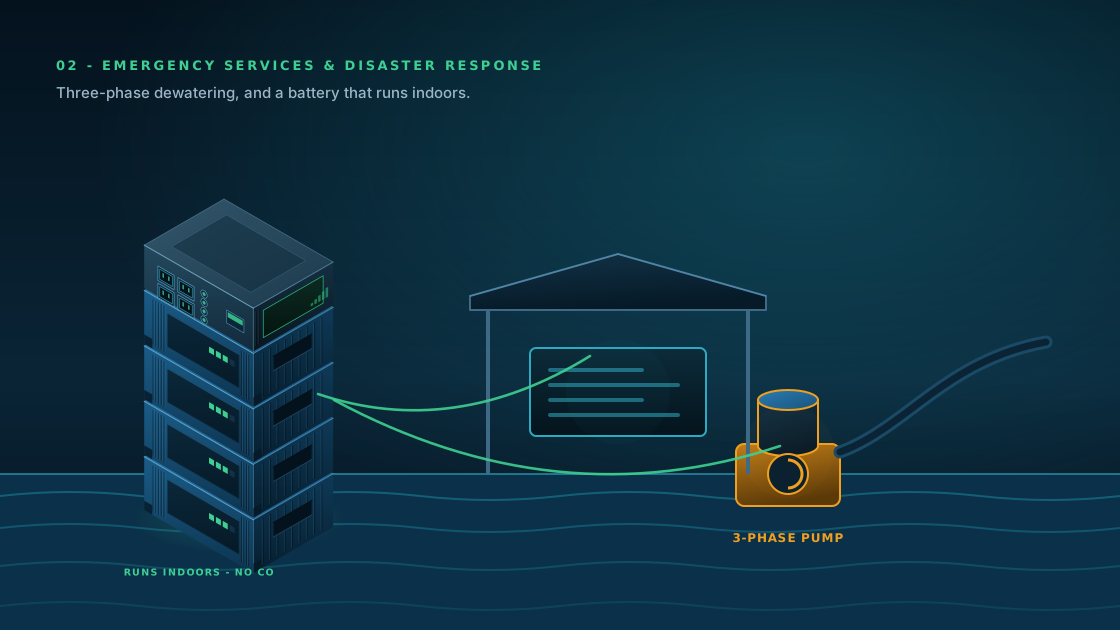
Emergency services & disaster response
Roughly 85 Americans die each year from portable-generator carbon monoxide, and the toll spikes after every hurricane. A fanless battery that runs indoors is a different category of product to a fire chief.
Read the scenario →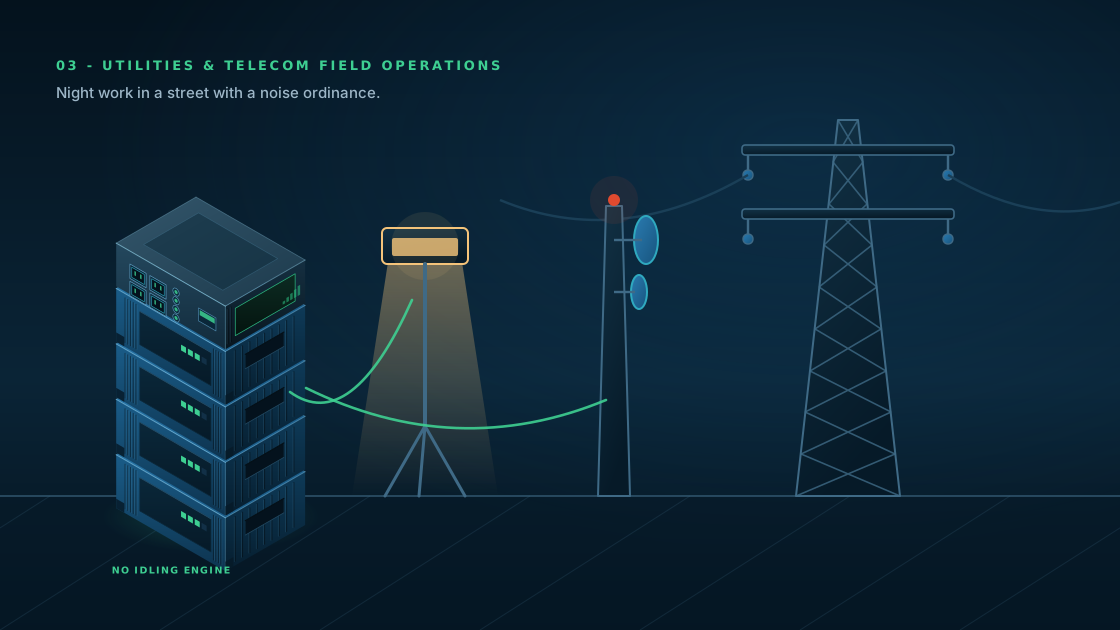
Utilities & telecom field operations
Line crews, substation maintenance, tower service and fibre splicing all run test gear, tools and lighting far from a panel — frequently at night in residential areas where noise ordinances bite.
Read the scenario →Talk to us
Working in defense and expeditionary?
Tell us the loads and the fleet size. We run instrumented 60-day loaners for serious evaluations — you get your own utilisation data rather than our assumptions.