
The situation
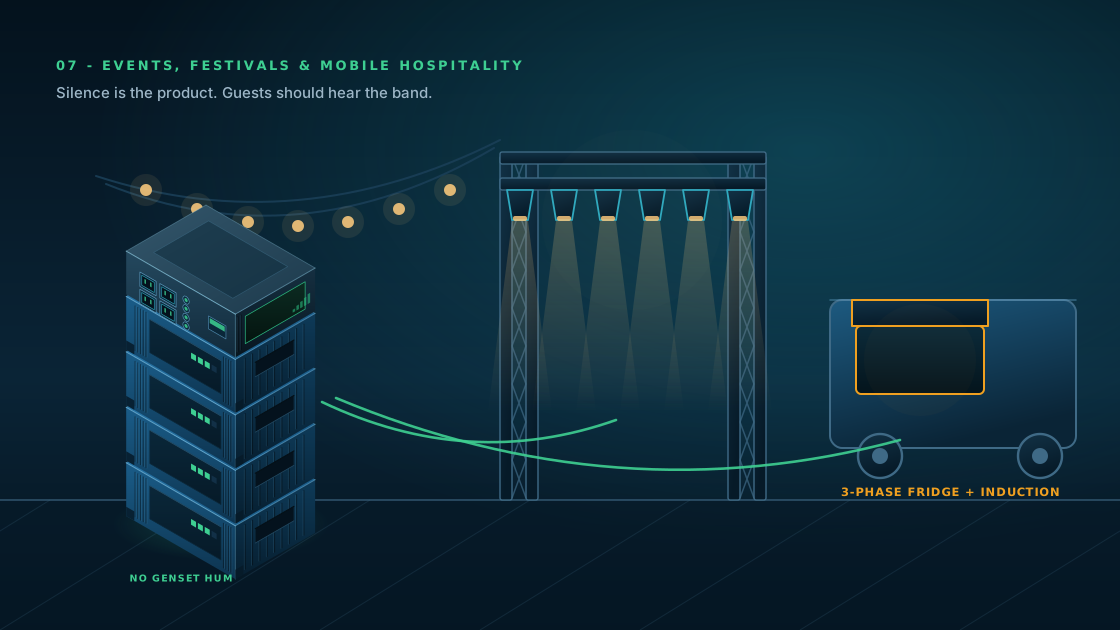
Food trucks, stages, vendor rows and pop-up retail — refrigeration and induction that has to run without an engine behind the crowd. Decisions are fast and the rental channel is the same one film uses.
Events buy on a short clock and through people you have already met if you have sold into film. That makes this cheap incremental effort rather than a new market entry. The margins are thinner and the units take more abuse.
- Buyer
- Event production and staging rental firms
- Replaces
- Spot generators behind vendor rows, and the cabling that hides them
- Buying cycle
- 1–3 months; rides on existing film rental relationships
- Where to meet them
- Rides on the film rental relationships you already have
The loads
What one unit runs, and what takes three
These are the loads this vertical actually runs. Most of them are single-phase and a single unit covers them. The three-phase ones are flagged, and they mean a three-unit set — which is a different quote, a different weight and a different conversation, so ask about them early.
- Commercial refrigeration decks in food trucks and vendor units — three-phase decks take three units
- Induction cooking suites, which draw hard and hate a dirty waveform
- Stage lighting, small PA and backline for satellite stages
- Vendor rows, box office, ticketing and comms
- Pop-up retail and brand activations indoors, where a generator cannot go
- Overnight site security lighting without a running engine
Three-phase takes three units. One unit is a single-phase machine — 6 kW, 5.9 kWh, four AC outlets. Its front panel carries a phase selector, so three units set to phase 1, phase 2 and phase 3 and joined by the combining connector will feed a three-phase load at 6 kW a phase. That is three enclosures, three charge states and roughly 90 kg for about 18 kWh. We say so plainly because an earlier version of this site claimed three-phase came out of a single box, and it does not. The three-unit specification →
Why we are better here
The comparison that decides this job.
What you are living with today
- Spot generators put engine noise directly behind the crowd
- Sub-3 kWh packs do not carry a vendor through a full trading day
- A 60 kg wheeled unit does not cross a festival field or go up a stage riser
- Fan noise is audible in a quiet marquee or an indoor activation
Solida Power in this scenario
- Silent, so it stands behind the vendor rather than 30 metres away
- 6 kW of clean sine for an induction suite and a refrigeration deck
- Modules carried across grass and up risers by one person
- Sealed and fanless, which matters in dust, rain and spilled drinks
- Same rental customers as film, so the channel is already open
Going deeper
The cheapest vertical to add
The rental houses that serve film also serve events. If the film relationship exists, this vertical costs almost nothing incremental to open, which is why it earns its place despite thinner margins.
Design for abuse
Event units get dropped, rained on and loaded by people who are not electricians. Ingress protection and mechanical robustness matter more here than in any other second-tier vertical.
The honest caveat
Margins are thinner than film and the duty cycle is harsher. Treat this as volume that funds the fleet, not as the vertical that proves the technology.
Every scenario page carries one. If we cannot name the weakness in a use case, we do not understand it well enough to sell into it.
Keep reading
Other scenarios
Film, TV & broadcast
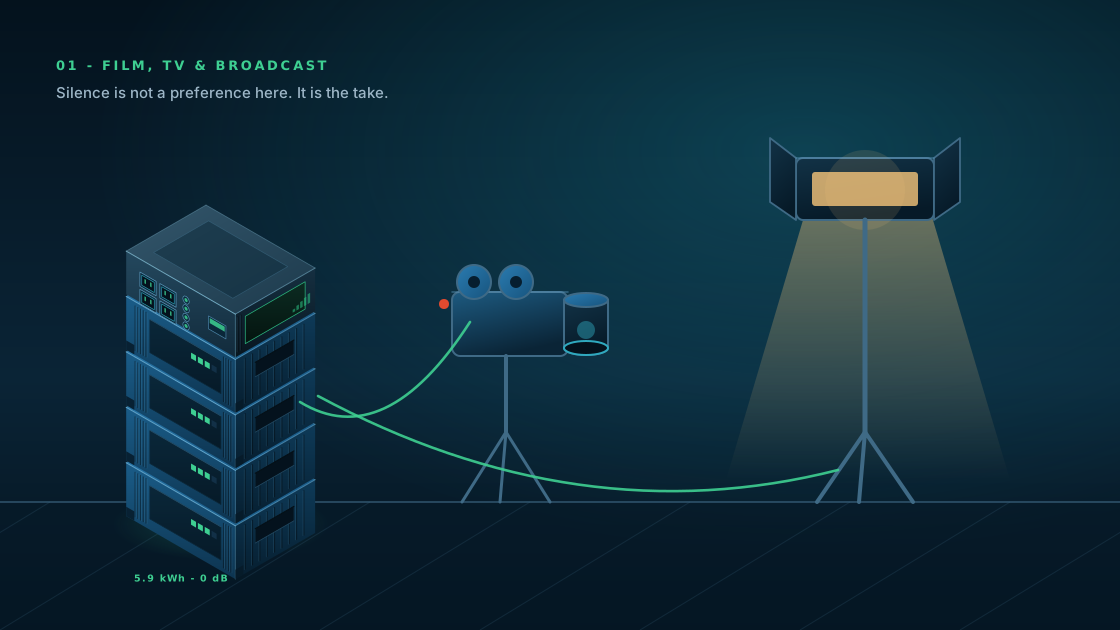
Batteries get placed next to talent, where nothing with an engine can go. 5.9 kWh covers a lighting package for a shift, silently, from a unit a grip can wheel onto the floor.
Read the scenario →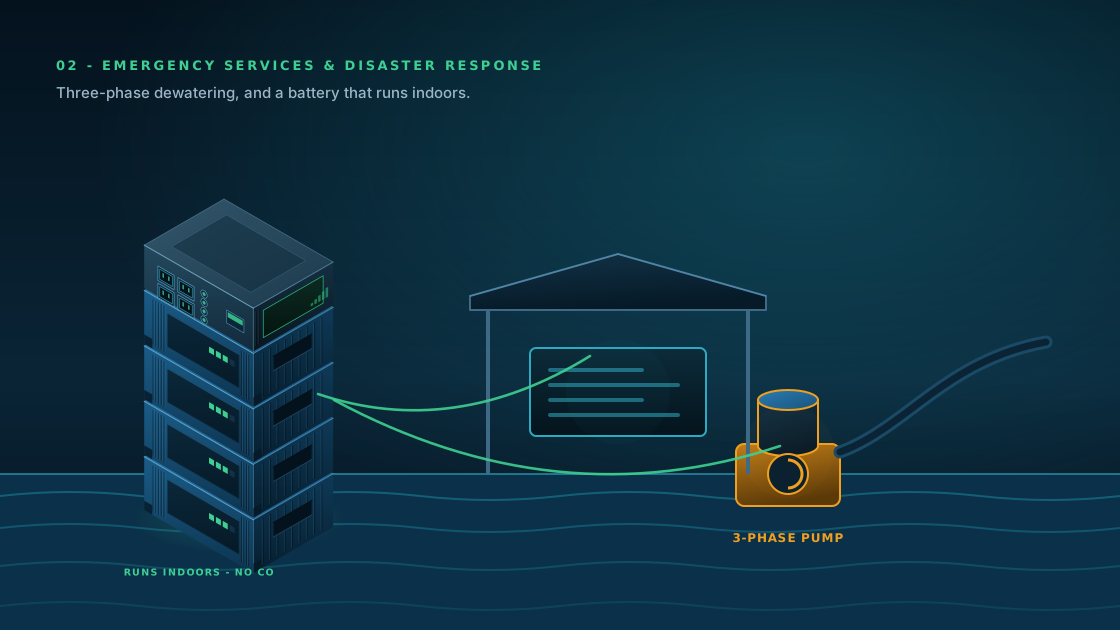
Emergency services & disaster response
Roughly 85 Americans die each year from portable-generator carbon monoxide, and the toll spikes after every hurricane. A fanless battery that runs indoors is a different category of product to a fire chief.
Read the scenario →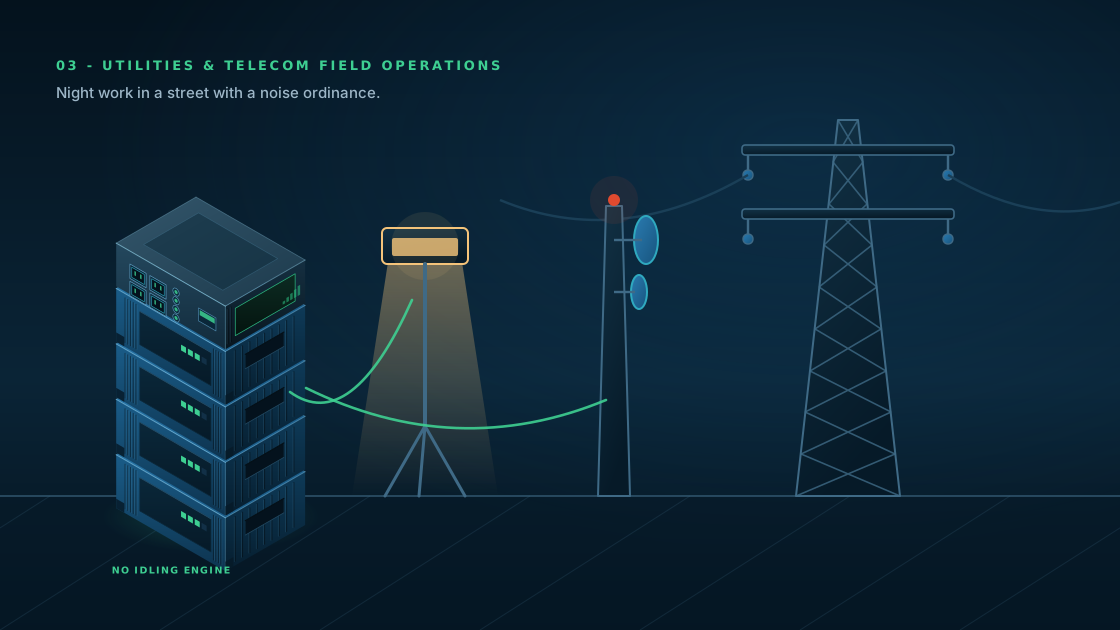
Utilities & telecom field operations
Line crews, substation maintenance, tower service and fibre splicing all run test gear, tools and lighting far from a panel — frequently at night in residential areas where noise ordinances bite.
Read the scenario →Talk to us
Working in events and hospitality?
Tell us the loads and the fleet size. We run instrumented 60-day loaners for serious evaluations — you get your own utilisation data rather than our assumptions.