
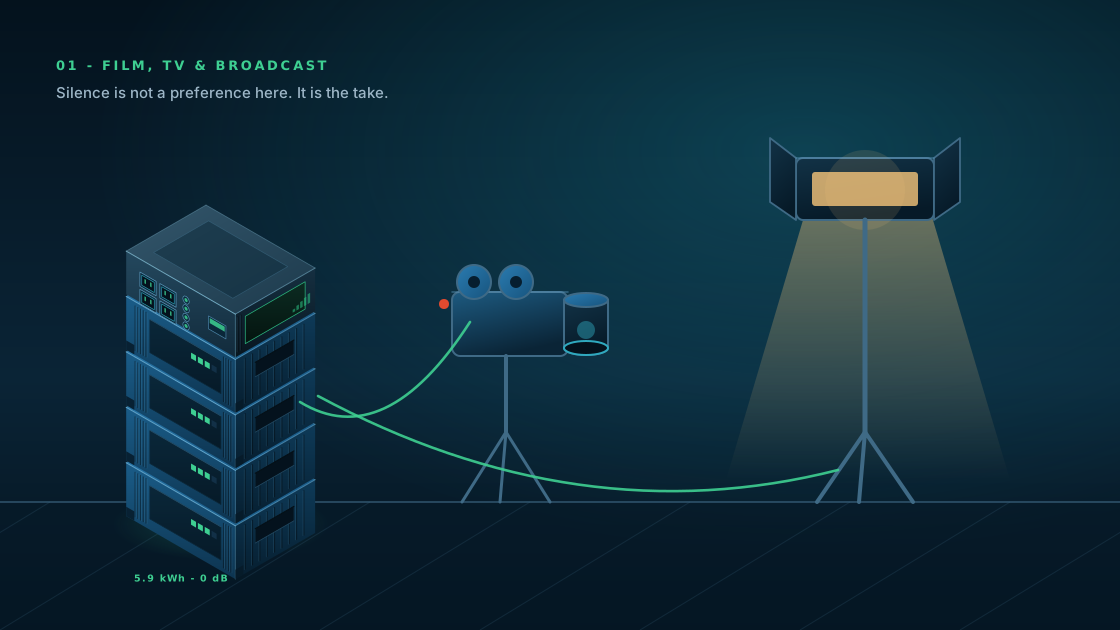
The situation
Batteries get placed next to talent, where nothing with an engine can go. 5.9 kWh covers a lighting package for a shift, silently, from a unit a grip can wheel onto the floor.
Sound is the constraint that decides what power you are allowed to bring on a set. A generator has to live far enough away that its noise floor stays out of the mix, which means cable runs, a distro plan, and a genny operator. A silent pack goes where the light needs to be.
- Buyer
- Rental houses, not productions — Cinelease, Keslow, MBS, Quixote, Greenwave
- Replaces
- Putt-putt and 10 kW tow generators, plus the cable runs that serve them
- Buying cycle
- 3–6 months; fleet orders of 10–50 units
- Where to meet them
- Cine Gear Expo, NAB, IBC; studio sustainability departments
The loads
What one unit runs, and what takes three
These are the loads this vertical actually runs. Most of them are single-phase and a single unit covers them. The three-phase ones are flagged, and they mean a three-unit set — which is a different quote, a different weight and a different conversation, so ask about them early.
- HMI ballast banks — 2.5 kW and 4 kW heads; three-phase ballasts take a three-unit set
- LED wall and volume-stage processing racks
- Camera, DIT cart, video village and comms for a full shift on one charge
- Hair, make-up and wardrobe trailers without an idling truck outside
- Smoke, wind and effects motors on location interiors
Three-phase takes three units. One unit is a single-phase machine — 6 kW, 5.9 kWh, four AC outlets. Its front panel carries a phase selector, so three units set to phase 1, phase 2 and phase 3 and joined by the combining connector will feed a three-phase load at 6 kW a phase. That is three enclosures, three charge states and roughly 90 kg for about 18 kWh. We say so plainly because an earlier version of this site claimed three-phase came out of a single box, and it does not. The three-unit specification →
Why we are better here
The comparison that decides this job.
What you are living with today
- A tow generator has to sit far enough away that you are running distro, not power
- Sub-3 kWh packs run out mid-setup, so somebody is swapping batteries during the shoot
- Fan-cooled packs are audible in a quiet interior — the fan cycles on exactly when the load rises
- A 60 kg wheeled pack does not go up the stairwell to a location interior
Solida Power in this scenario
- Fanless and passively cooled, so the unit can stand inside the set, not behind it
- 6 kW of clean sine runs the single-phase package outright; three-phase ballasts run off three units
- 5.9 kWh covers a lighting package for a shift; modules hot-swap between setups
- 7.5 kg per module means a grip carries it up a stairwell without a lift gate
- xPowerOS logs delivered kWh per production, which is what a rental house bills against
Going deeper
Why the rental house is the customer, not the production
Productions rent. They do not buy capital equipment, and they do not carry it between jobs. One rental house adopting the product puts it in front of fifty productions and hands you utilisation data no amount of market research would buy. Rental economics also work in your favour: houses rent at roughly 3–5% of purchase price per day, so a unit that goes out more often than a generator pays back fast.
The sustainability mandate is already written
Disney and Netflix have both published findings that battery storage was the most cost-effective diesel alternative they studied, and those mandates now flow down through production contracts. The buyer often does not need convincing that batteries are the answer — they need one that runs the package silently for a full shift.
The honest caveat
Ask what is actually on the truck. If the lighting package is all single-phase LED, a smaller pack may win on price. If it is three-phase, the honest answer is three of ours and a connector, not one of anything.
Every scenario page carries one. If we cannot name the weakness in a use case, we do not understand it well enough to sell into it.
Keep reading
Other scenarios
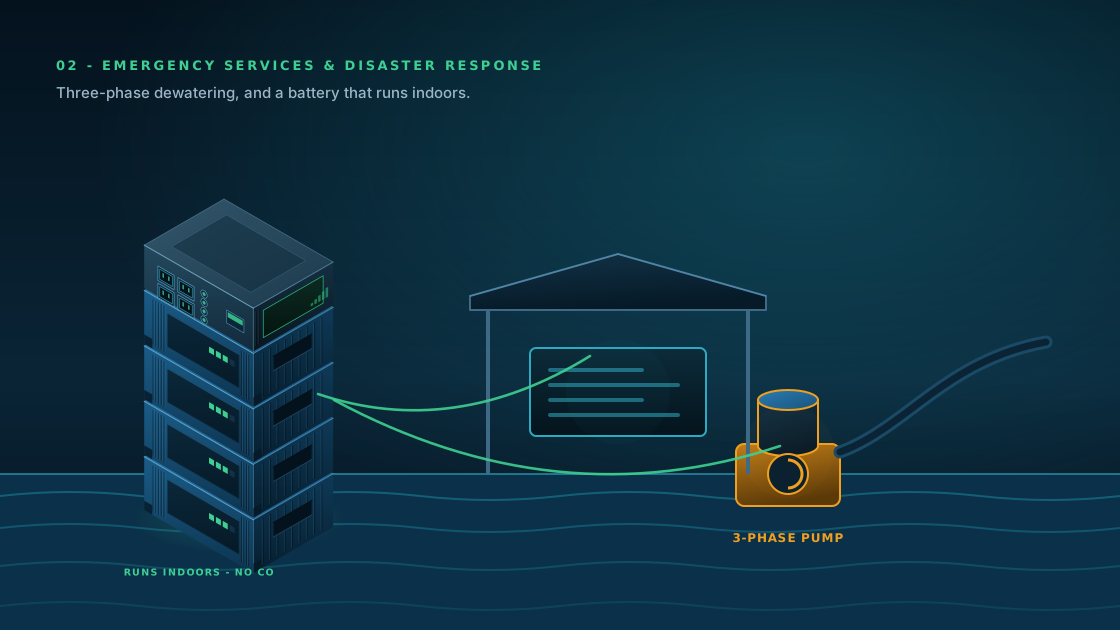
Emergency services & disaster response
Roughly 85 Americans die each year from portable-generator carbon monoxide, and the toll spikes after every hurricane. A fanless battery that runs indoors is a different category of product to a fire chief.
Read the scenario →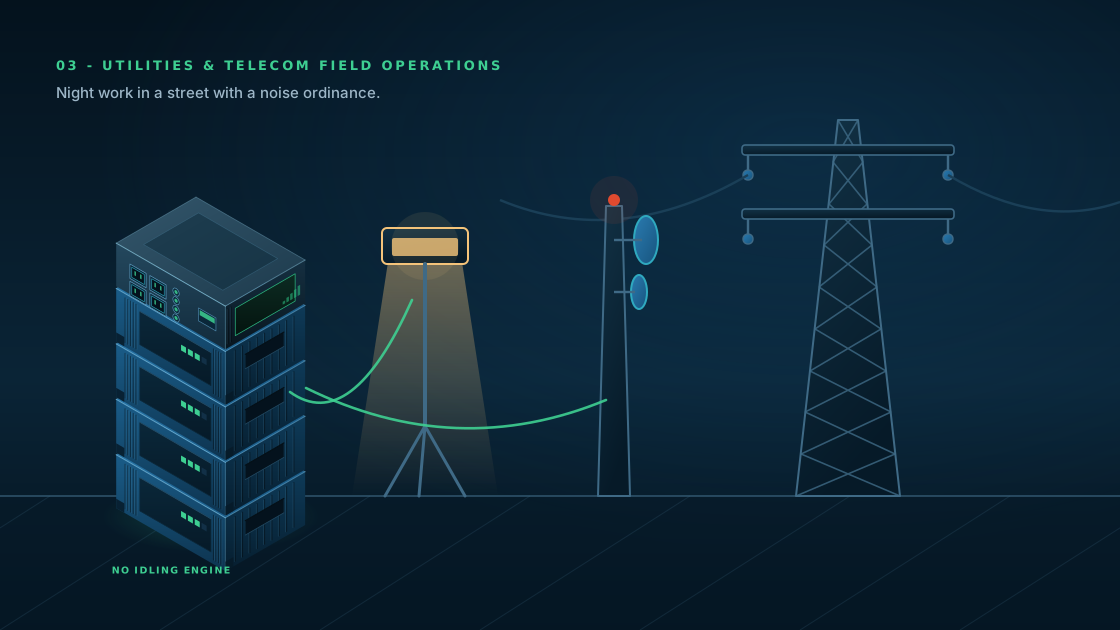
Utilities & telecom field operations
Line crews, substation maintenance, tower service and fibre splicing all run test gear, tools and lighting far from a panel — frequently at night in residential areas where noise ordinances bite.
Read the scenario →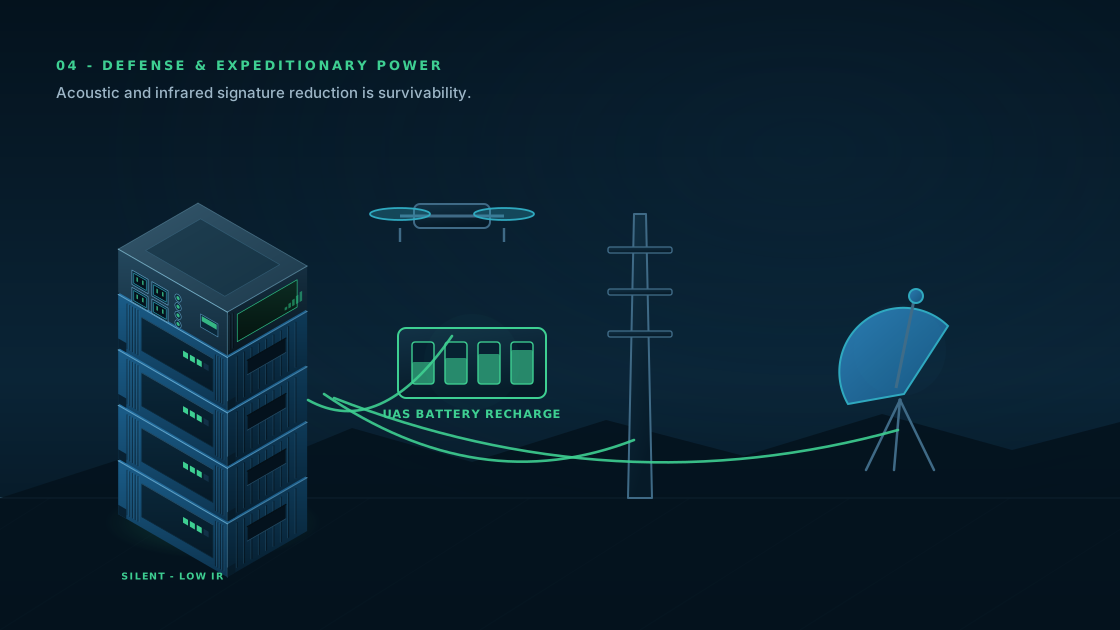
Defense & expeditionary power
The highest margin and the best fit for the underlying physics. Acoustic and infrared signature reduction is survivability, and field recharging of drone batteries is a large, urgent and badly served load.
Read the scenario →Talk to us
Working in film and broadcast?
Tell us the loads and the fleet size. We run instrumented 60-day loaners for serious evaluations — you get your own utilisation data rather than our assumptions.