
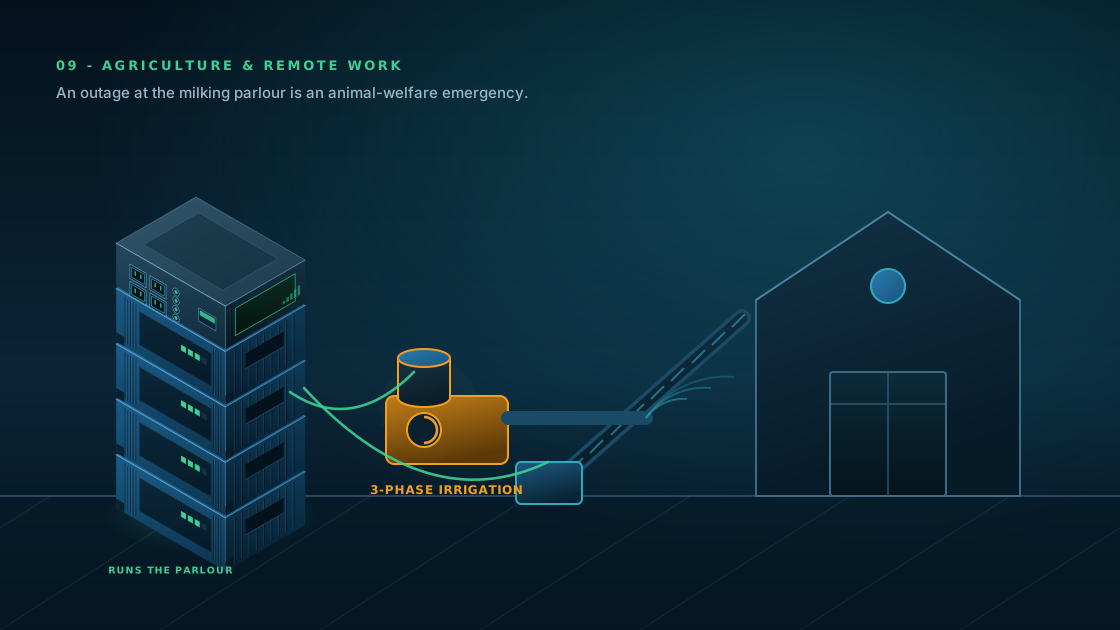
The situation
Irrigation pumps, grain augers, feed mixers and parlour vacuum pumps — motor loads far from a panel, where willingness to pay during an outage is very high.
Farms sit at the end of the most fragile distribution lines on the network, and the cost of not running a pump is measured in livestock and crop rather than in convenience. The smaller motors are single-phase and take one unit; the larger ones are three-phase and take three.
- Buyer
- Farm operators, agricultural co-operatives, rural equipment dealers
- Replaces
- PTO generators and standby diesel sets at outbuildings
- Buying cycle
- 3–9 months; seasonal purchasing, dealer channel
- Where to meet them
- Regional farm shows, co-operative buying groups, rural dealer networks
The loads
What one unit runs, and what takes three
These are the loads this vertical actually runs. Most of them are single-phase and a single unit covers them. The three-phase ones are flagged, and they mean a three-unit set — which is a different quote, a different weight and a different conversation, so ask about them early.
- Irrigation pump starting and stock water pumping
- Milking parlour vacuum pumps — an outage here is an animal-welfare emergency
- Grain augers and feed mixers during outages
- Vineyard frost fans, must pumps and mobile crush equipment
- Research stations, glaciology, archaeology and wildlife monitoring
- Mining survey, remote drilling and exploration camps
- Ski patrol, mountain rescue and avalanche control
Three-phase takes three units. One unit is a single-phase machine — 6 kW, 5.9 kWh, four AC outlets. Its front panel carries a phase selector, so three units set to phase 1, phase 2 and phase 3 and joined by the combining connector will feed a three-phase load at 6 kW a phase. That is three enclosures, three charge states and roughly 90 kg for about 18 kWh. We say so plainly because an earlier version of this site claimed three-phase came out of a single box, and it does not. The three-unit specification →
Why we are better here
The comparison that decides this job.
What you are living with today
- A PTO generator ties up the tractor you also need for the job
- Standby diesel at an outbuilding is capital that sits idle most of the year
- A consumer pack has neither the surge headroom for a pump motor nor a way to reach the pump house
- A wheeled 60 kg unit does not cross a field, a paddock or a snowline
Solida Power in this scenario
- Motor starting from a pack one person wheels to the pump house — three units when the motor is three-phase
- No fuel to store, stabilise or steal at a remote outbuilding
- Modules stage across several sites rather than one generator serving one
- Sealed and fanless, in dust, chaff and washdown environments
- Silent enough for stock handling and for research sites recording wildlife
Going deeper
Willingness to pay spikes exactly when the grid fails
Rural distribution lines fail first and get restored last. The economic loss from a single failed milking or a lost frost night dwarfs the cost of the unit, which makes this a straightforward sale in the moment and a hard one out of season. Sell through dealers who are already there when the outage happens.
The honest caveat
Seasonal, price-sensitive, and dealer-mediated. Motor starting current is the specification that decides whether this vertical is real for you.
Every scenario page carries one. If we cannot name the weakness in a use case, we do not understand it well enough to sell into it.
Keep reading
Other scenarios
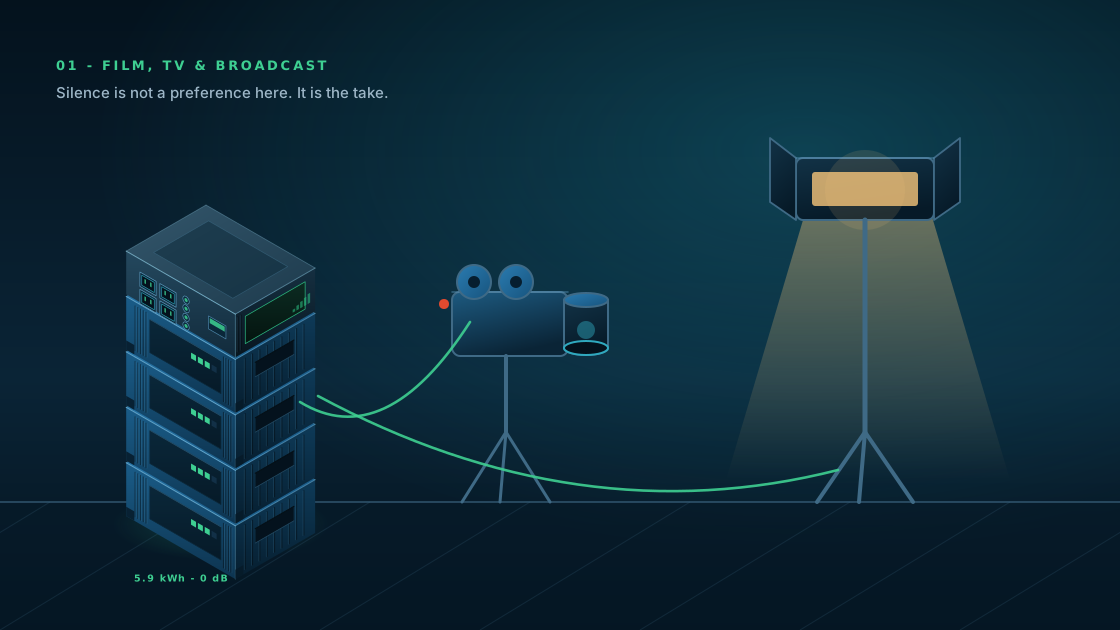
Film, TV & broadcast
Batteries get placed next to talent, where nothing with an engine can go. 5.9 kWh covers a lighting package for a shift, silently, from a unit a grip can wheel onto the floor.
Read the scenario →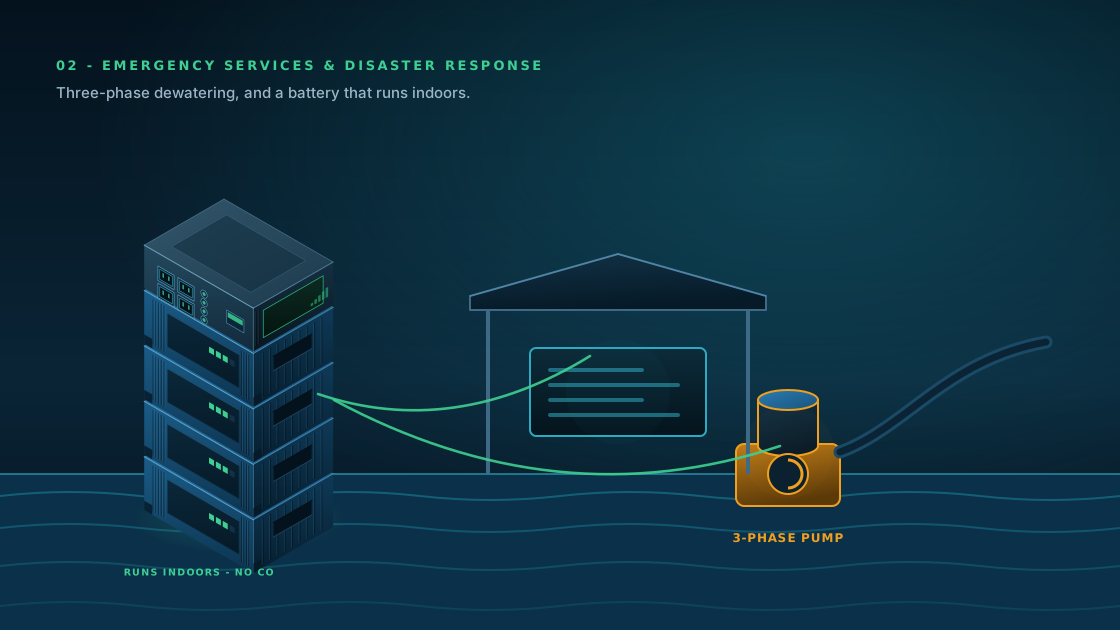
Emergency services & disaster response
Roughly 85 Americans die each year from portable-generator carbon monoxide, and the toll spikes after every hurricane. A fanless battery that runs indoors is a different category of product to a fire chief.
Read the scenario →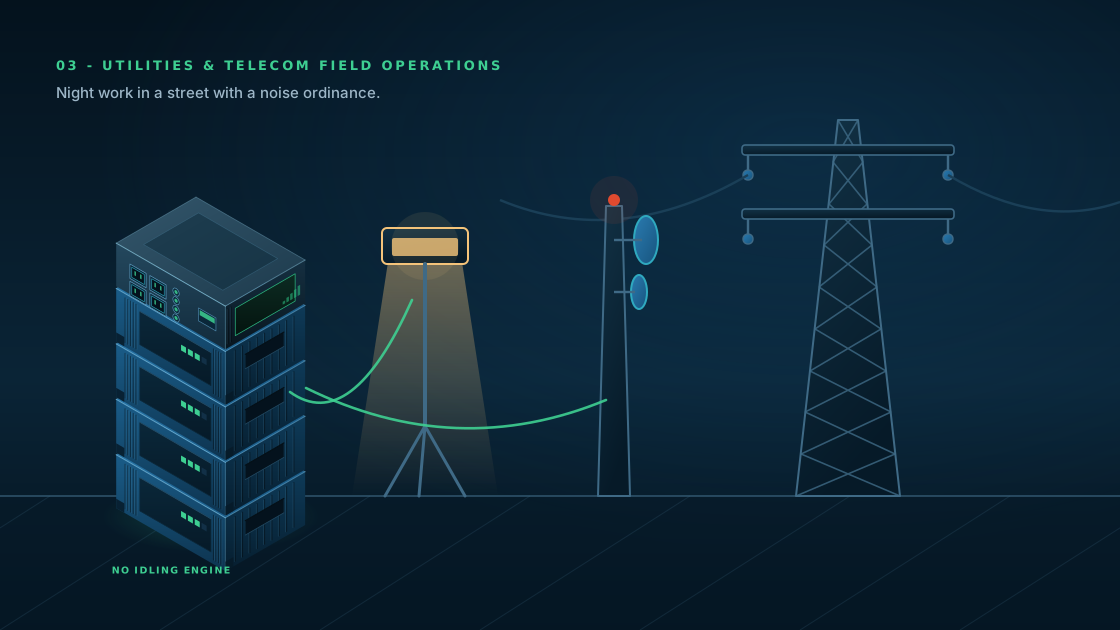
Utilities & telecom field operations
Line crews, substation maintenance, tower service and fibre splicing all run test gear, tools and lighting far from a panel — frequently at night in residential areas where noise ordinances bite.
Read the scenario →Talk to us
Working in agriculture and remote?
Tell us the loads and the fleet size. We run instrumented 60-day loaners for serious evaluations — you get your own utilisation data rather than our assumptions.