
The situation
Roughly 85 Americans die each year from portable-generator carbon monoxide, and the toll spikes after every hurricane. A fanless battery that runs indoors is a different category of product to a fire chief.
The safety argument here is documentable rather than rhetorical. Sixteen CO deaths followed Irma; six were confirmed after Ida. Those are people who ran a generator in a garage, a porch, or a doorway because the alternative was no power. A pack with no exhaust removes the decision entirely.
- Buyer
- Fire departments, county EOCs, state emergency management, Red Cross, NGOs
- Replaces
- Towable generators, and the carbon-monoxide risk that comes with them
- Buying cycle
- 6–18 months, but grant-calendar driven and repeatable
- Where to meet them
- AFG and FEMA HMGP/BRIC grant eligibility; FDIC, IAEM, National Hurricane Conference
The loads
What one unit runs, and what takes three
These are the loads this vertical actually runs. Most of them are single-phase and a single unit covers them. The three-phase ones are flagged, and they mean a three-unit set — which is a different quote, a different weight and a different conversation, so ask about them early.
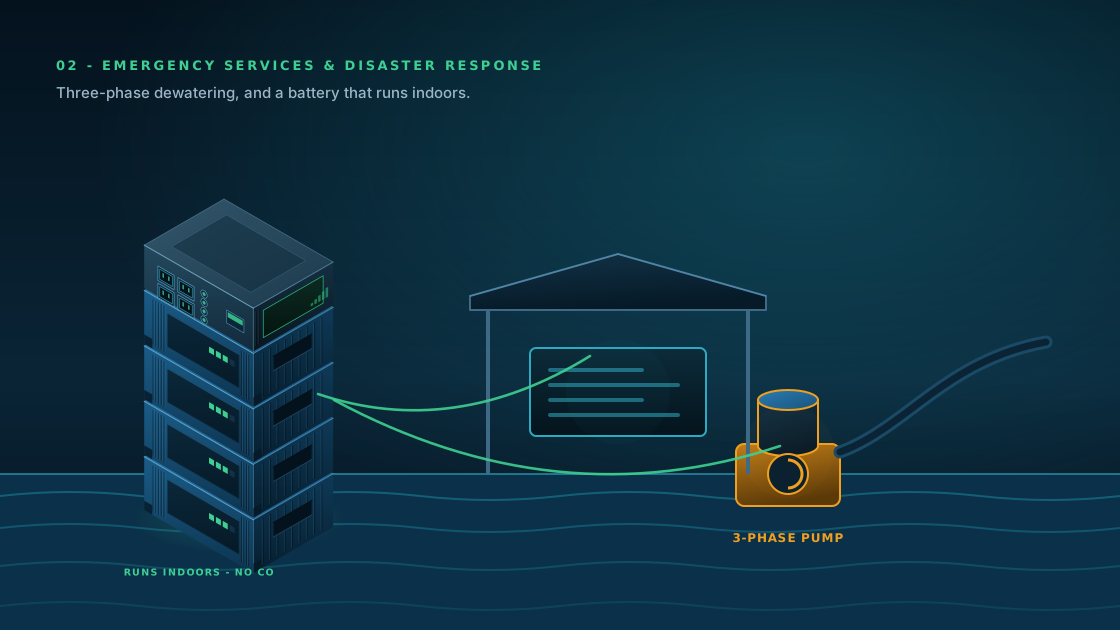
- Flood dewatering and trash pumps — single-phase to about 2 HP; larger ones are three-phase, so three units
- Water purification and reverse-osmosis skids at camps and shelters
- Mobile incident command posts and EOC overflow
- Refrigerated storage — vaccines, insulin, mass-casualty mortuary capacity
- Oxygen concentrators and dialysis for medically dependent residents, indoors, with no CO risk
- Scene lighting and hydraulic rescue tool charging
- Points of distribution, shelter kitchens, public charging stations
Three-phase takes three units. One unit is a single-phase machine — 6 kW, 5.9 kWh, four AC outlets. Its front panel carries a phase selector, so three units set to phase 1, phase 2 and phase 3 and joined by the combining connector will feed a three-phase load at 6 kW a phase. That is three enclosures, three charge states and roughly 90 kg for about 18 kWh. We say so plainly because an earlier version of this site claimed three-phase came out of a single box, and it does not. The three-unit specification →
Why we are better here
The comparison that decides this job.
What you are living with today
- A towable genset cannot enter the building it is powering
- Consumer packs are fan-cooled, and a fan intake is the wrong thing to have in floodwater aerosol and ash
- 60 kg wheeled units do not go up a flooded stairwell or into a shelter basement
- Fuel logistics collapse in exactly the conditions that created the callout
Solida Power in this scenario
- No exhaust, so it powers an occupied shelter, a nursing home corridor or a garage
- 6 kW starts the pump that gets the water out — one unit for single-phase, three for a three-phase pump
- Modules go in one at a time, by hand, on foot, over debris
- Fanless means no fan intake pulling in floodwater aerosol, ash or dust
- xPowerOS state-of-charge across a deployed fleet, from one screen at the EOC
Going deeper
Get the FEMA equipment code mapped — this is the whole sale
Municipal and county buyers spend grant money, and grant money flows against FEMA's Authorized Equipment List. Generators sit under code 10GE-00-GENR. A one-page grant-eligibility sheet naming the AEL code, plus AFG, HMGP and BRIC programmes, converts a hard capital sale into a form a fire chief's grant writer already knows how to fill in. Very few battery vendors bother, and it removes the single largest objection in this vertical.
Dewatering is the load a fire chief can picture without a spec sheet
It is the first thing needed after any flood, it happens inside a building where an engine cannot run, and it is a motor — which makes surge headroom, not continuous rating, the number that decides the sale. Lead with the pump, then with the fact that the unit can stand in the room it is powering.
The honest caveat
Air transport is the open question. A 5.9 kWh pack is Class 9 dangerous goods under UN3480/3481, and rapid deployment usually means flying. The modular architecture is the answer — shippable at reduced state of charge in DG-certified cases — but the compliance path has to exist before the capability is marketed.
Every scenario page carries one. If we cannot name the weakness in a use case, we do not understand it well enough to sell into it.
Keep reading
Other scenarios
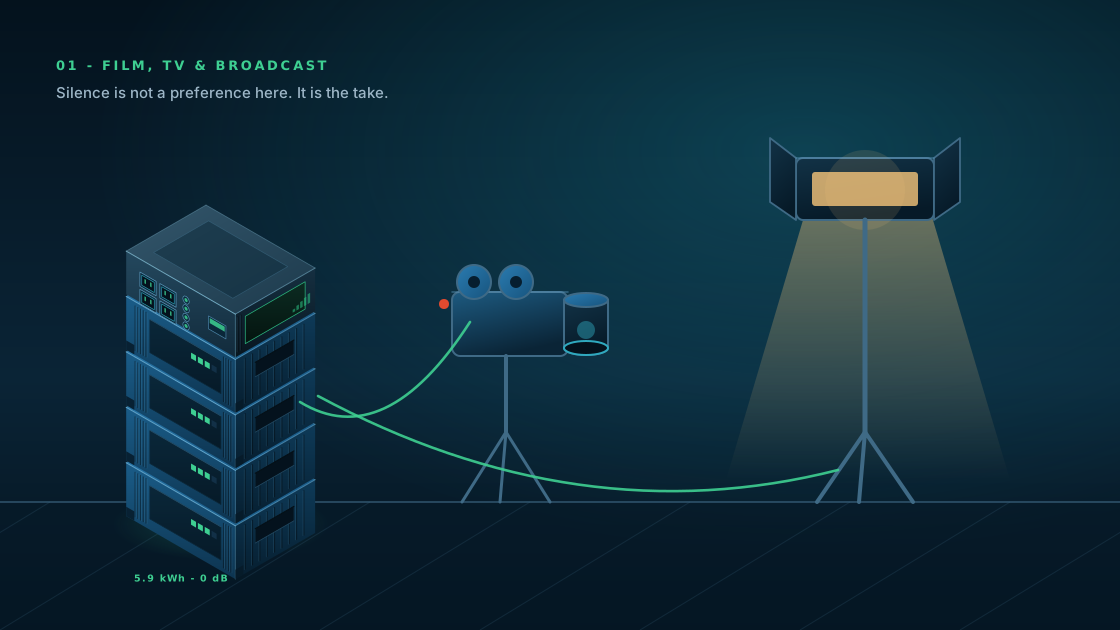
Film, TV & broadcast
Batteries get placed next to talent, where nothing with an engine can go. 5.9 kWh covers a lighting package for a shift, silently, from a unit a grip can wheel onto the floor.
Read the scenario →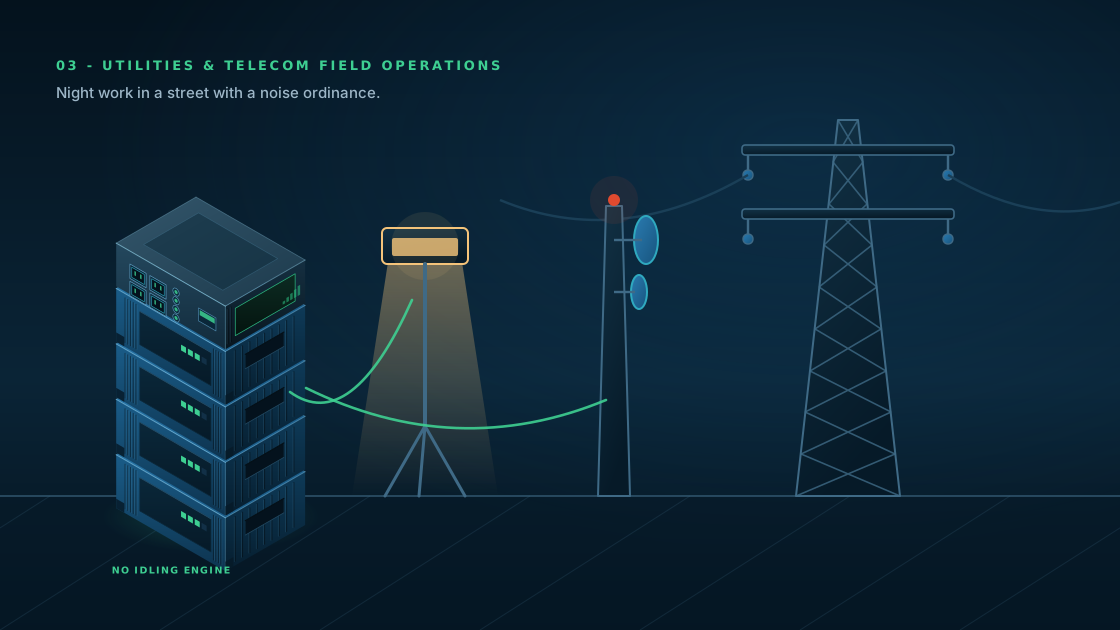
Utilities & telecom field operations
Line crews, substation maintenance, tower service and fibre splicing all run test gear, tools and lighting far from a panel — frequently at night in residential areas where noise ordinances bite.
Read the scenario →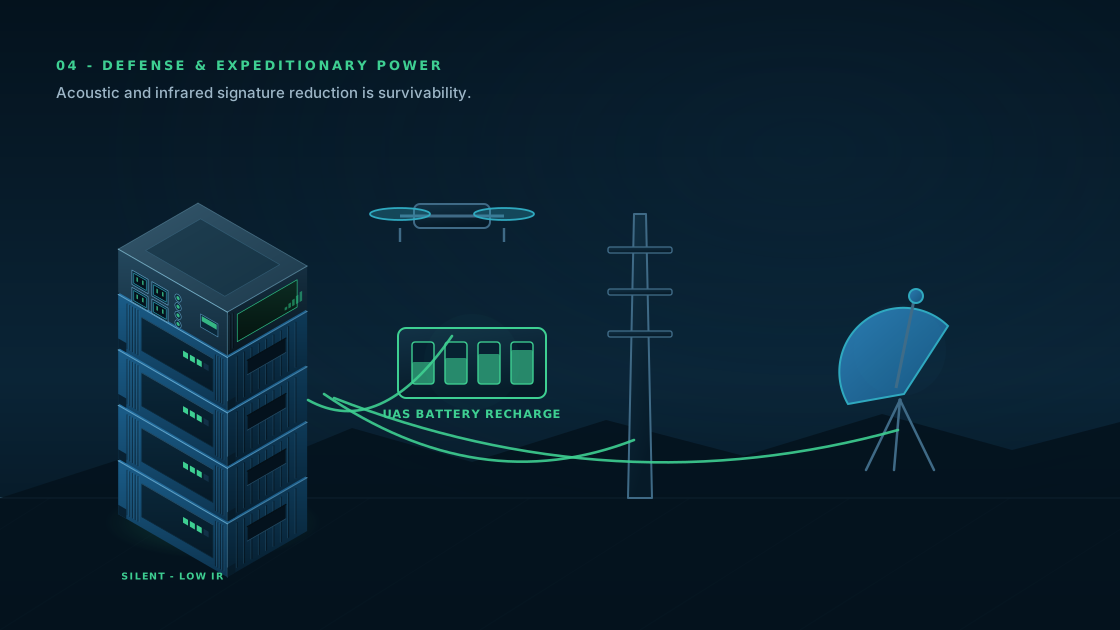
Defense & expeditionary power
The highest margin and the best fit for the underlying physics. Acoustic and infrared signature reduction is survivability, and field recharging of drone batteries is a large, urgent and badly served load.
Read the scenario →Talk to us
Working in emergency and disaster?
Tell us the loads and the fleet size. We run instrumented 60-day loaners for serious evaluations — you get your own utilisation data rather than our assumptions.