
The situation
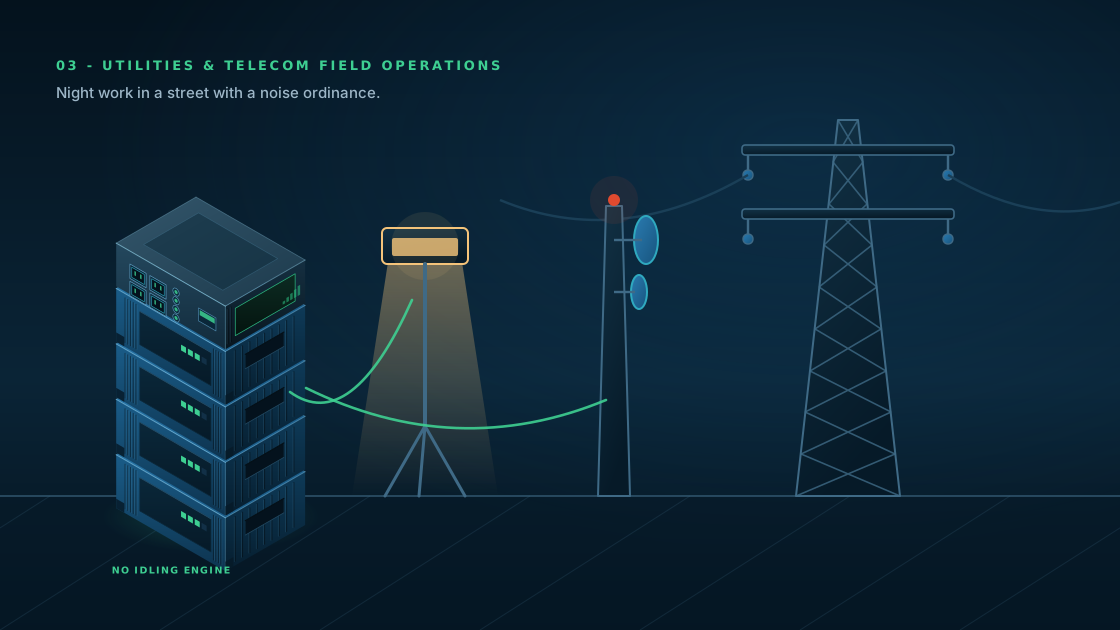
Line crews, substation maintenance, tower service and fibre splicing all run test gear, tools and lighting far from a panel — frequently at night in residential areas where noise ordinances bite.
Utilities carry large capital budgets, are under storm-hardening pressure, and buy in fleet quantities once a unit is on the approved equipment list. The entry is slower than film or events. Once you are in, it is very sticky.
- Buyer
- Utility fleet and procurement; tower and splice contractors
- Replaces
- Truck-mounted inverters, idling engines, tow-behind generators
- Buying cycle
- 9–18 months, pilot then fleet
- Where to meet them
- DISTRIBUTECH, IEEE PES T&D, NATE UNITE, Connect (X)
The loads
What one unit runs, and what takes three
These are the loads this vertical actually runs. Most of them are single-phase and a single unit covers them. The three-phase ones are flagged, and they mean a three-unit set — which is a different quote, a different weight and a different conversation, so ask about them early.
- Cable pulling winches, hydraulic pumps and compressors — three-phase ones take a three-unit set
- Substation test sets — hipot, relay test, transformer turns ratio
- Fibre splicing rigs, fusion splicers and OTDR benches, quietly, in a van
- Tower-top lighting and rigging power for overnight service windows
- Comms repeaters, satellite uplink and cell-on-wheels restoration
- Eliminating vehicle idling purely to run an inverter off the truck
Three-phase takes three units. One unit is a single-phase machine — 6 kW, 5.9 kWh, four AC outlets. Its front panel carries a phase selector, so three units set to phase 1, phase 2 and phase 3 and joined by the combining connector will feed a three-phase load at 6 kW a phase. That is three enclosures, three charge states and roughly 90 kg for about 18 kWh. We say so plainly because an earlier version of this site claimed three-phase came out of a single box, and it does not. The three-unit specification →
Why we are better here
The comparison that decides this job.
What you are living with today
- A truck idling all night to power an inverter burns fuel, wears the engine, and is increasingly banned outright
- A tow-behind genset in a residential street at 2 a.m. generates complaints and sometimes fines
- A truck inverter is limited to what the alternator can spare, and the engine has to run to supply it
- Fan noise is small, but it is the difference between a complaint and none
Solida Power in this scenario
- Silent operation is compatible with overnight residential work windows
- 6 kW runs test sets, splice rigs and site lighting with no engine running at all
- Modules ride in a van without a tail lift and get carried to a manhole or a tower base
- No engine hours accrued on the service vehicle
- Fleet telemetry through xPowerOS, which is how a utility tracks anything it owns
Going deeper
Approved equipment lists are the real gate
A utility does not buy the best unit; it buys the unit on the list. Getting onto that list is slow, document-heavy work, and it is also the moat — once you are specified, a competitor has to restart the whole process to displace you.
Storm response is the wedge into the fleet
Storm hardening is where discretionary utility money moves fastest. A pack that supports both routine night work and storm restoration gets funded from two budgets, which is how a pilot becomes a fleet order.
The honest caveat
Publish the peak and 10-second overload figure before you pitch this vertical. Winch and pump starting current is what a fleet engineer will ask about first, and the continuous 6 kW number will not answer them.
Every scenario page carries one. If we cannot name the weakness in a use case, we do not understand it well enough to sell into it.
Keep reading
Other scenarios
Film, TV & broadcast
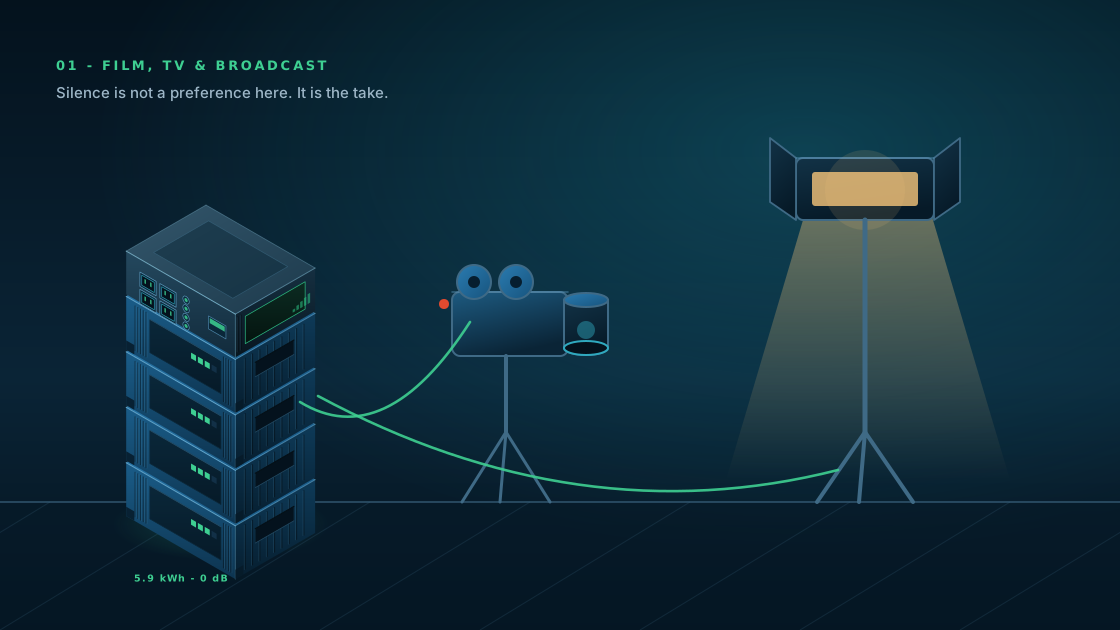
Batteries get placed next to talent, where nothing with an engine can go. 5.9 kWh covers a lighting package for a shift, silently, from a unit a grip can wheel onto the floor.
Read the scenario →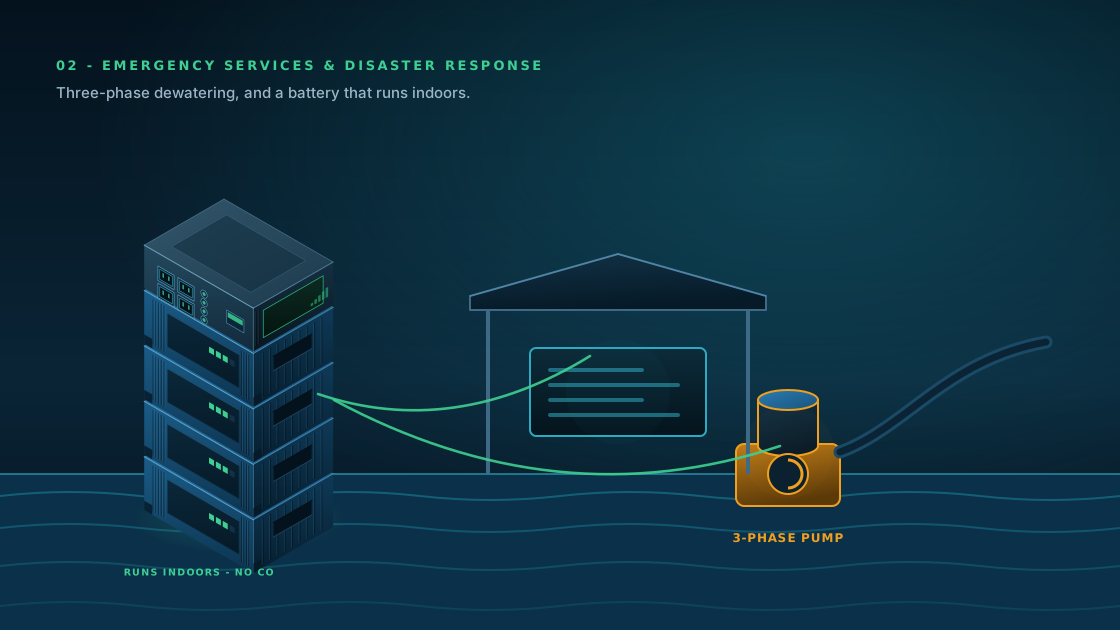
Emergency services & disaster response
Roughly 85 Americans die each year from portable-generator carbon monoxide, and the toll spikes after every hurricane. A fanless battery that runs indoors is a different category of product to a fire chief.
Read the scenario →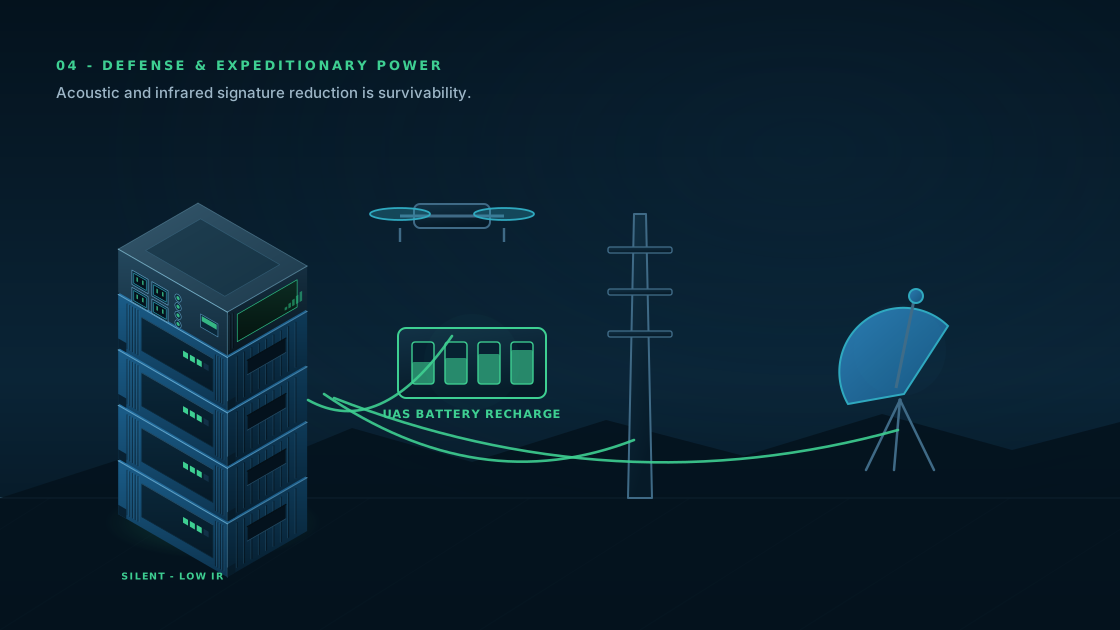
Defense & expeditionary power
The highest margin and the best fit for the underlying physics. Acoustic and infrared signature reduction is survivability, and field recharging of drone batteries is a large, urgent and badly served load.
Read the scenario →Talk to us
Working in utilities and telecom?
Tell us the loads and the fleet size. We run instrumented 60-day loaners for serious evaluations — you get your own utilisation data rather than our assumptions.