
The product
A power system that arrives in parcels.
Four 48 V battery modules and one inverter head unit in a wheeled enclosure 444 × 370 × 600 mm. Nothing you lift weighs more than 7.5 kg, and the assembled system delivers 6 kW of single-phase AC without a single fan.
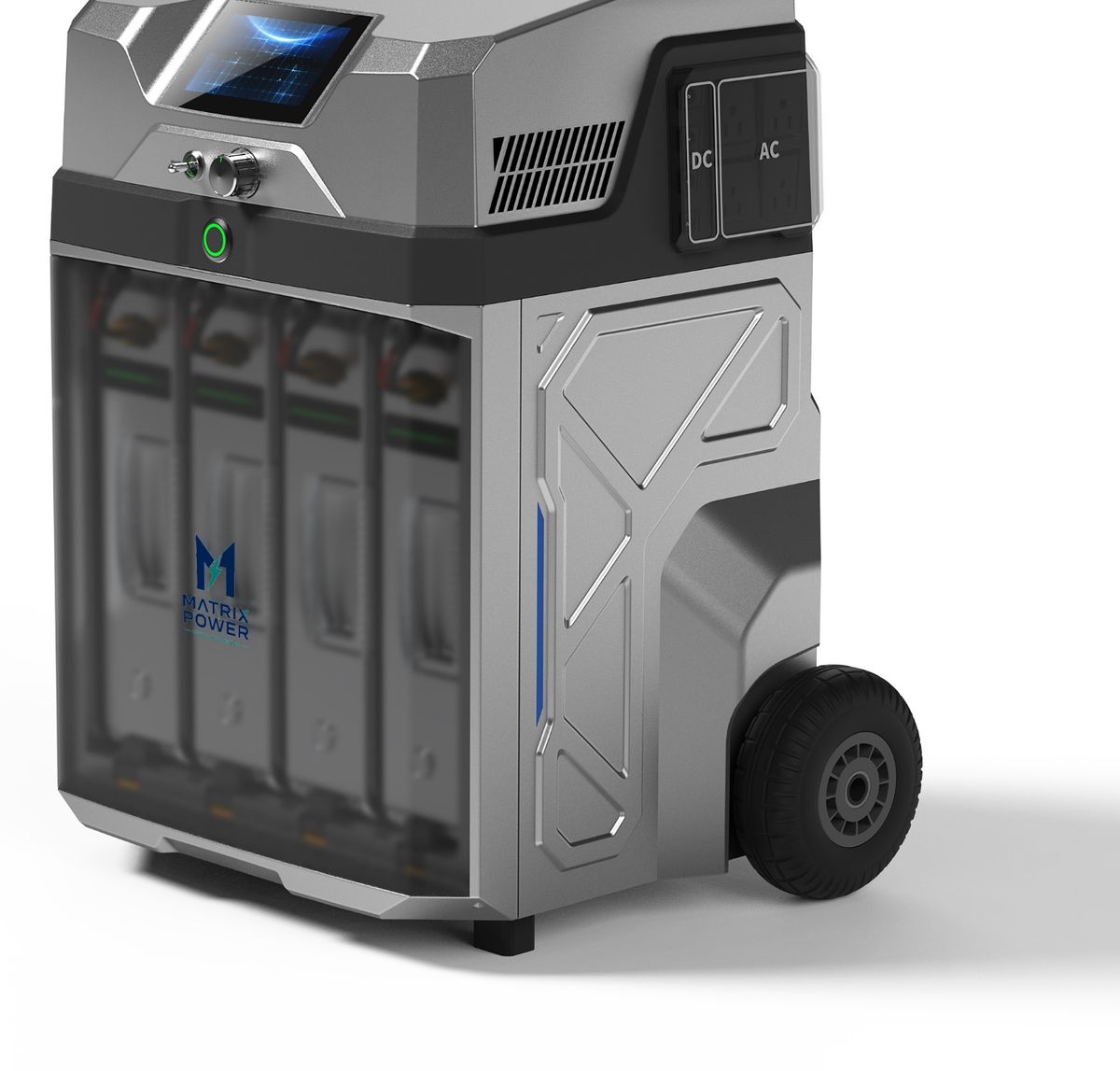
Two products, one system
A standard energy module, and a software-defined inverter.
The battery is a standardised 1.48 kWh energy module. The head unit is the proprietary part — the power-conversion platform that turns however many modules you brought into a clean line-voltage supply.
1.48 kWh · 48 V · 7.5 kg
One person, one hand, one trip. Each module carries its own state-of-charge indication and its own conversion path, so modules are interchangeable and can be added, removed or swapped without reconfiguring the system.
- Add modules to add capacity — the system reconfigures itself
- Hot-swap mid-shift rather than powering down
- Ship, store and replace one small part, not the whole machine
- A failed module is a 7.5 kg spare, not a service call
6 kW · single-phase · fanless
The head unit runs xPowerOS and coordinates the individual module outputs into one synchronised AC supply, delivered through four AC outlets and four DC ports behind a flip-up cover. Line voltage is configured at order.
- Four AC outlets and four DC outputs from one bay
- A front-panel phase selector, so three units can cover a three-phase load
- Pure sine, software-defined waveform
- Per-module telemetry: state of charge, delivered kWh, duty cycle
Three-phase takes three units. One unit is a single-phase machine — 6 kW, 5.9 kWh, four AC outlets. Its front panel carries a phase selector, so three units set to phase 1, phase 2 and phase 3 and joined by the combining connector will feed a three-phase load at 6 kW a phase. That is three enclosures, three charge states and roughly 90 kg for about 18 kWh. We say so plainly because an earlier version of this site claimed three-phase came out of a single box, and it does not. The three-unit specification →
The enclosure
Every surface you actually touch.
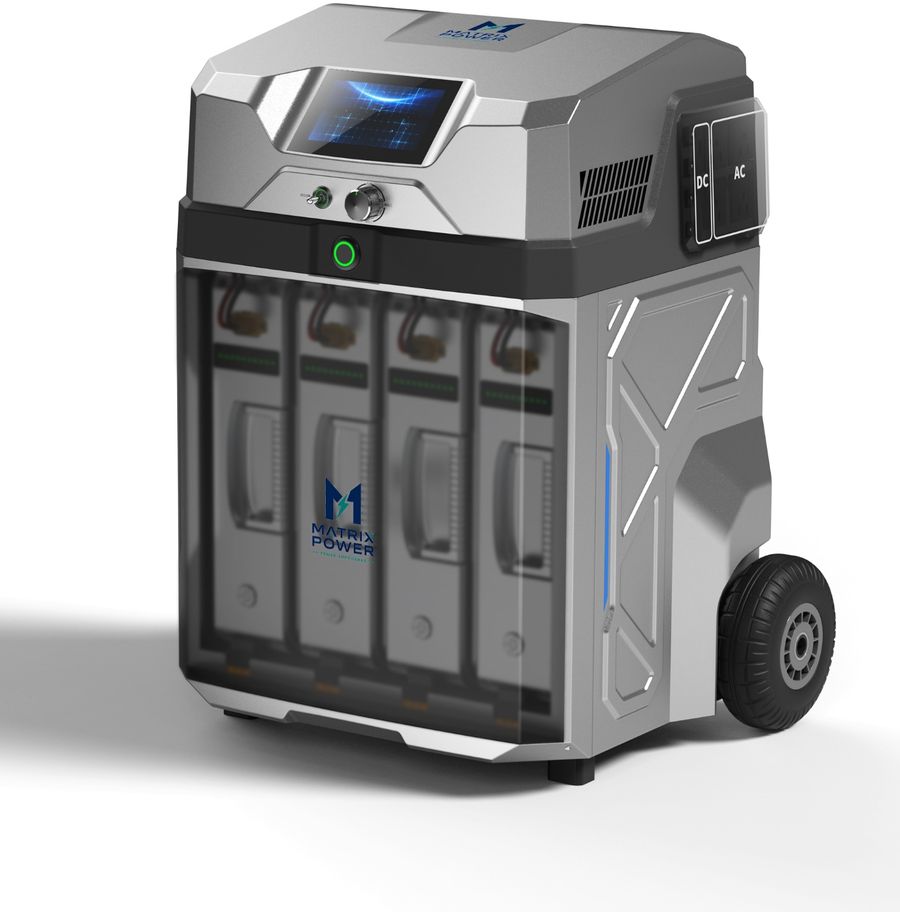
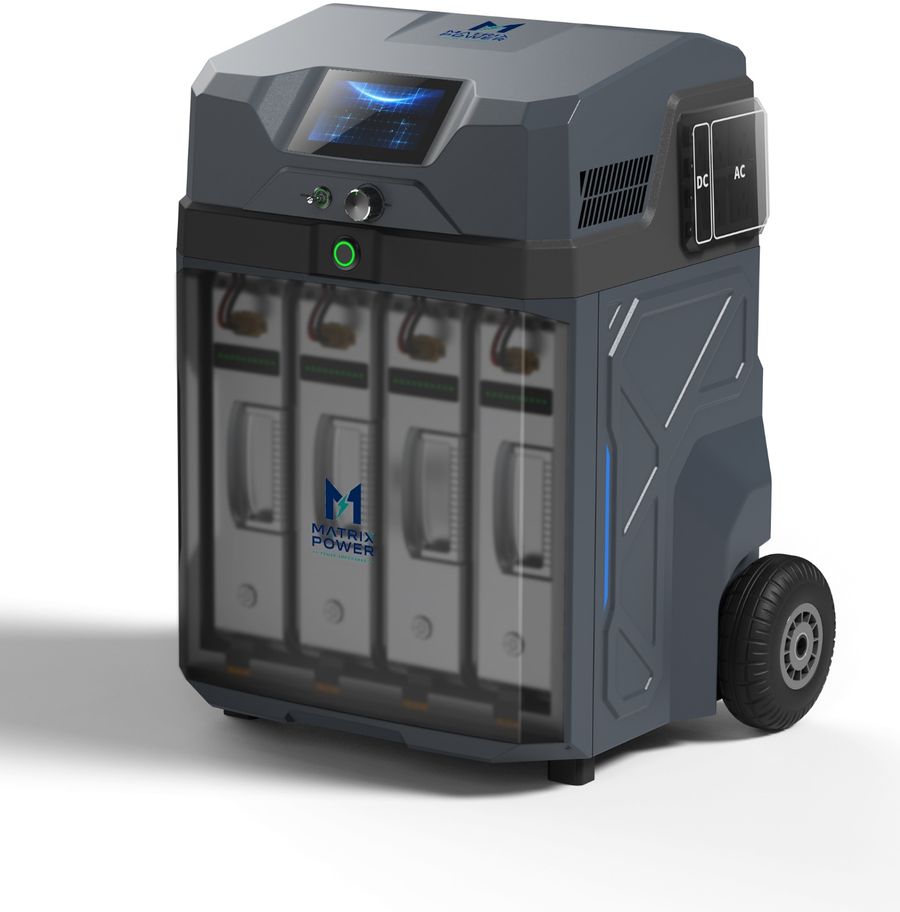
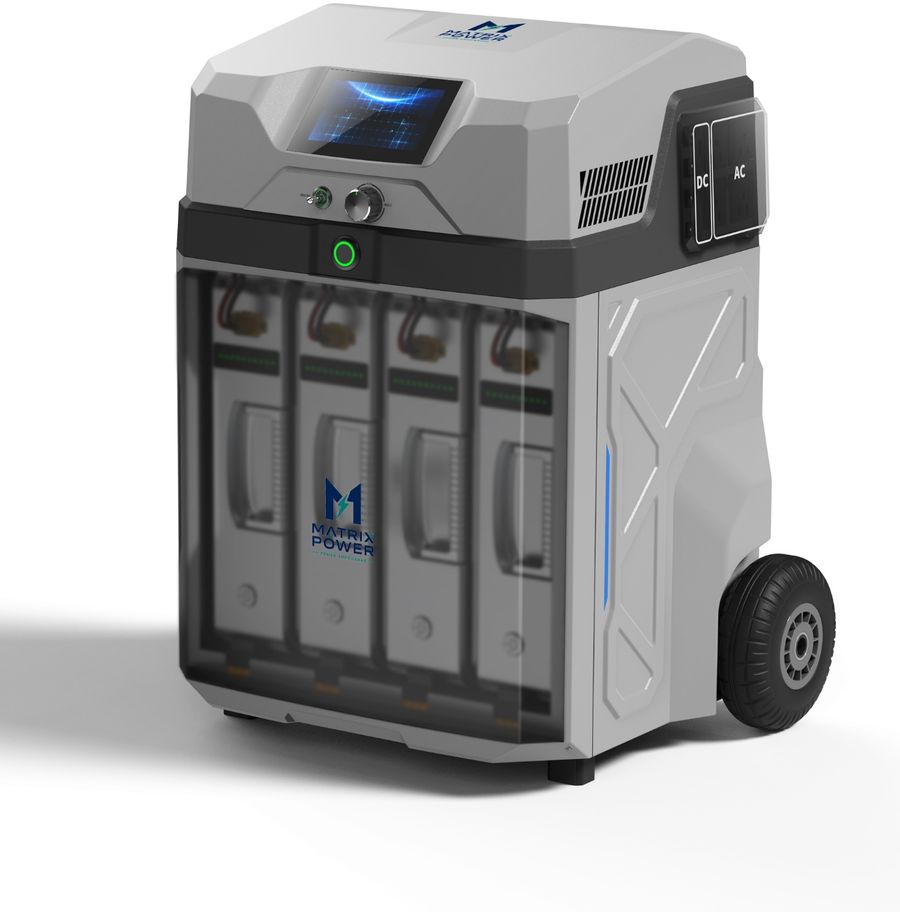
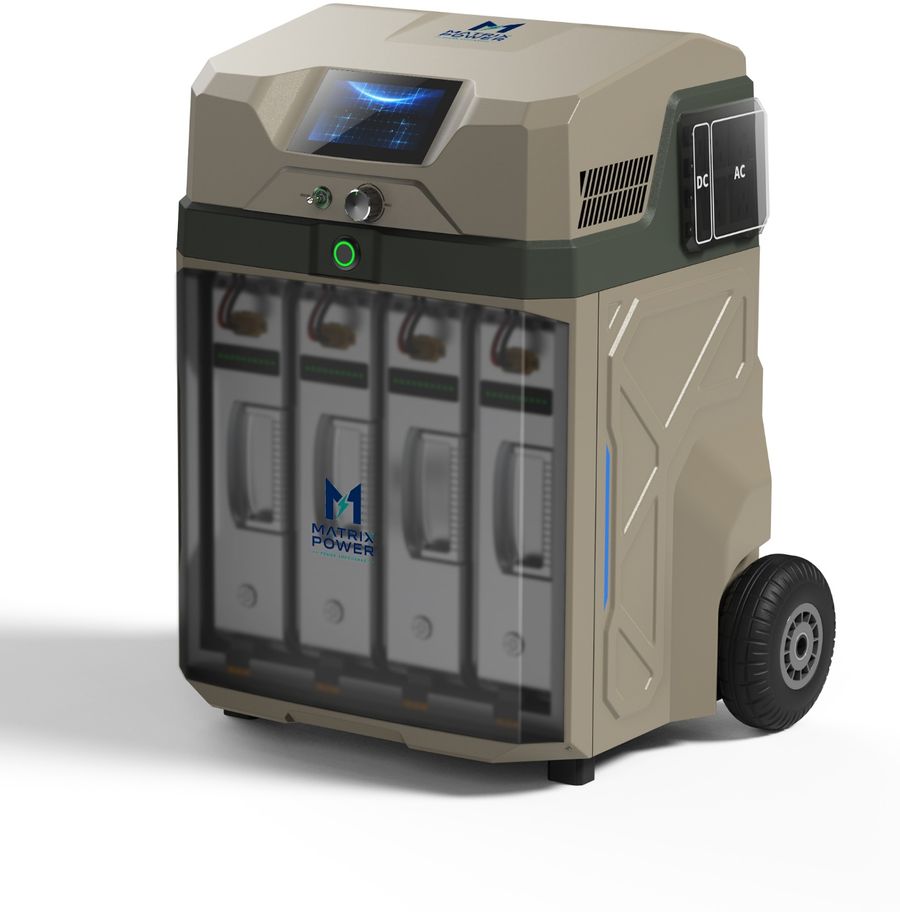
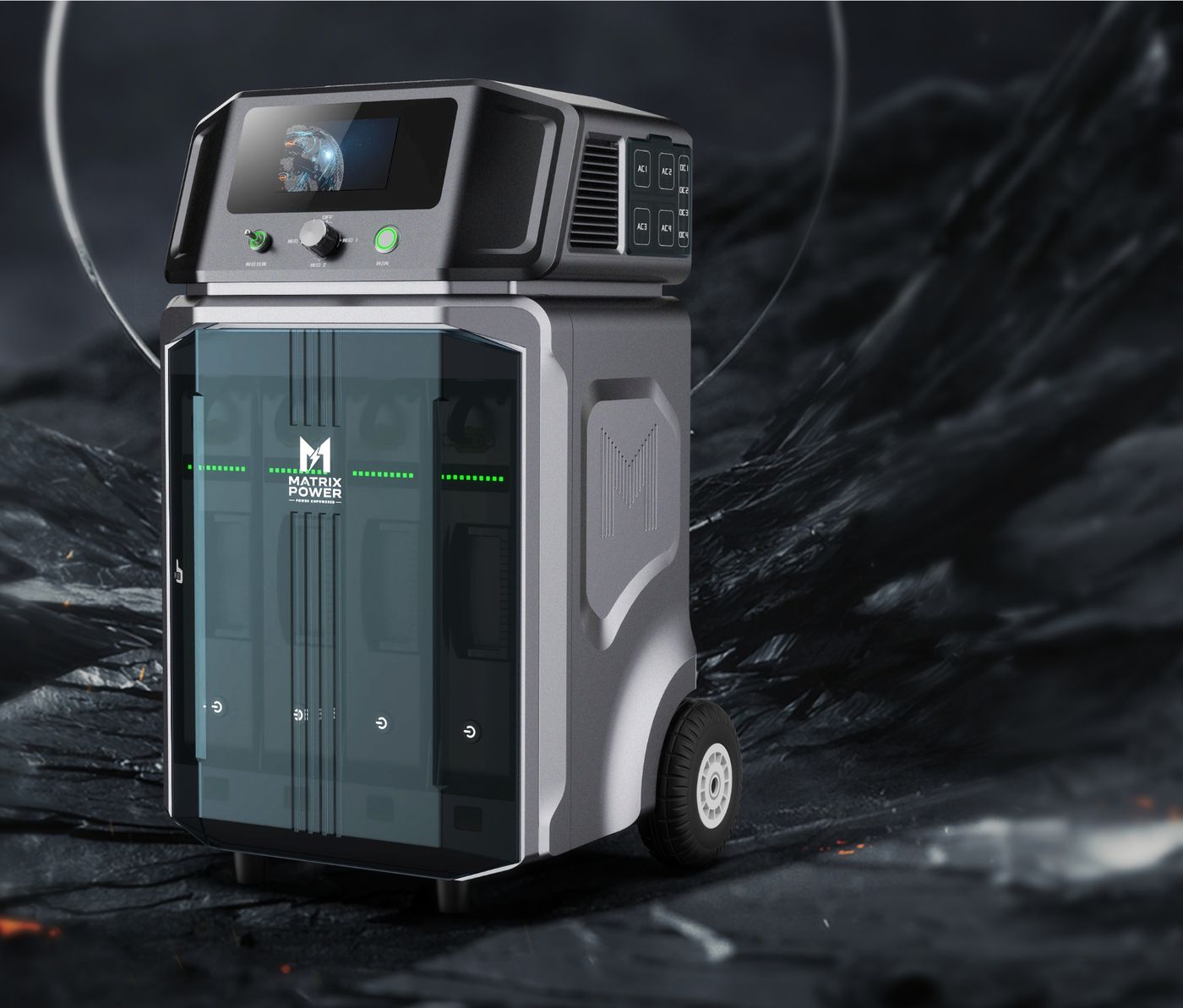
Wheels and a tow handle for the car park, a door that opens to four modules for everywhere else, and the outputs grouped under one cover so there is a single place to look for a socket.
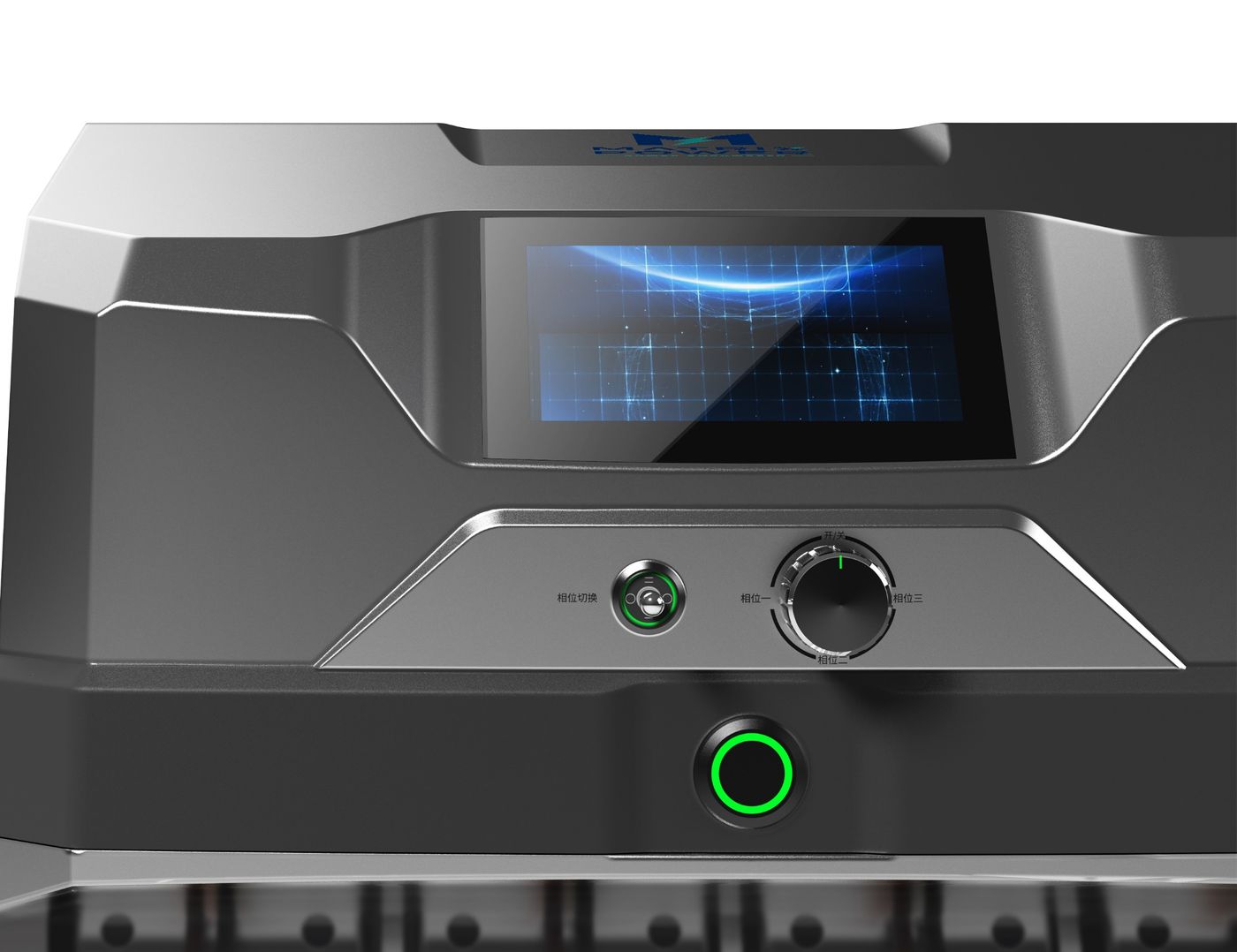
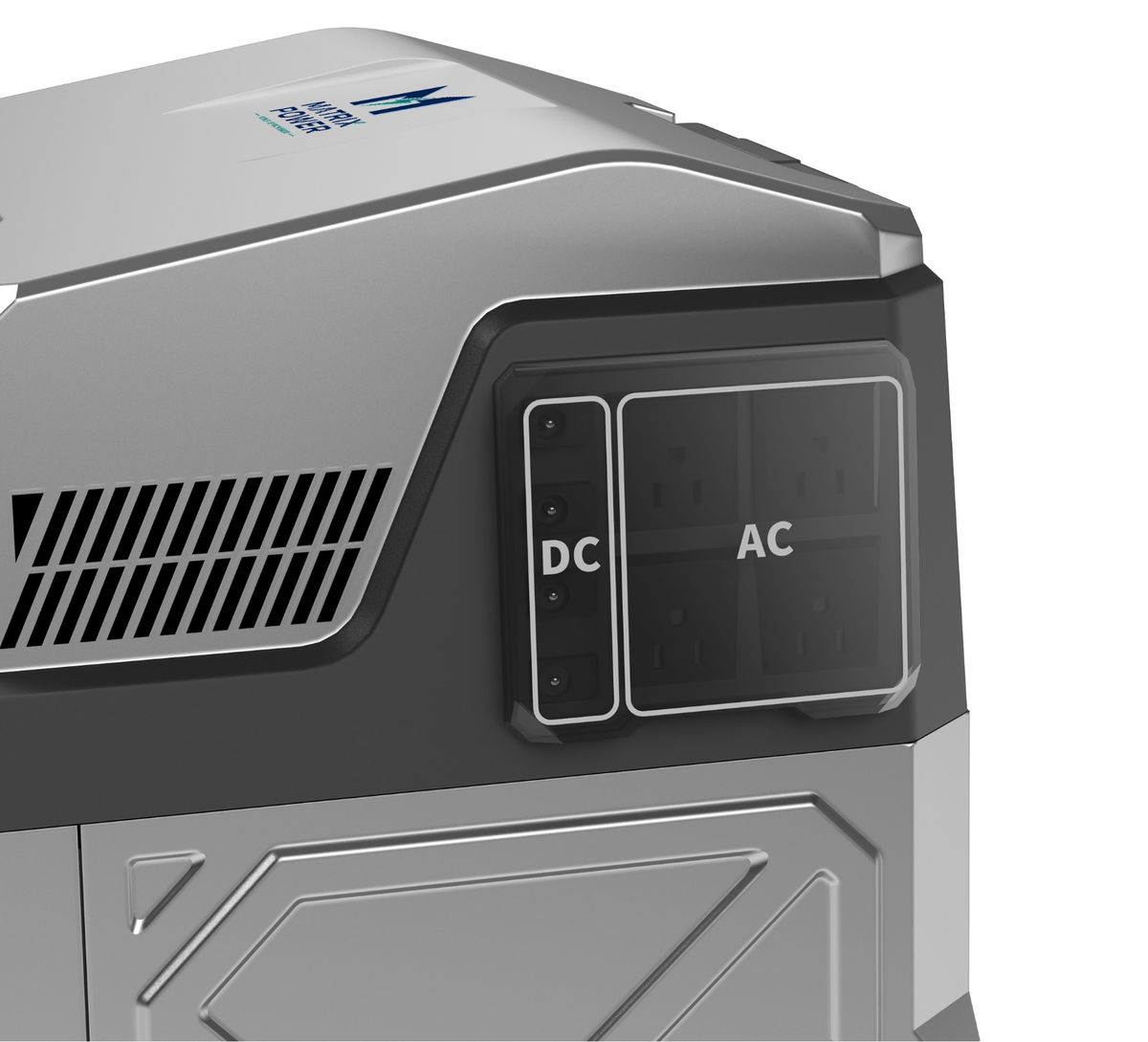

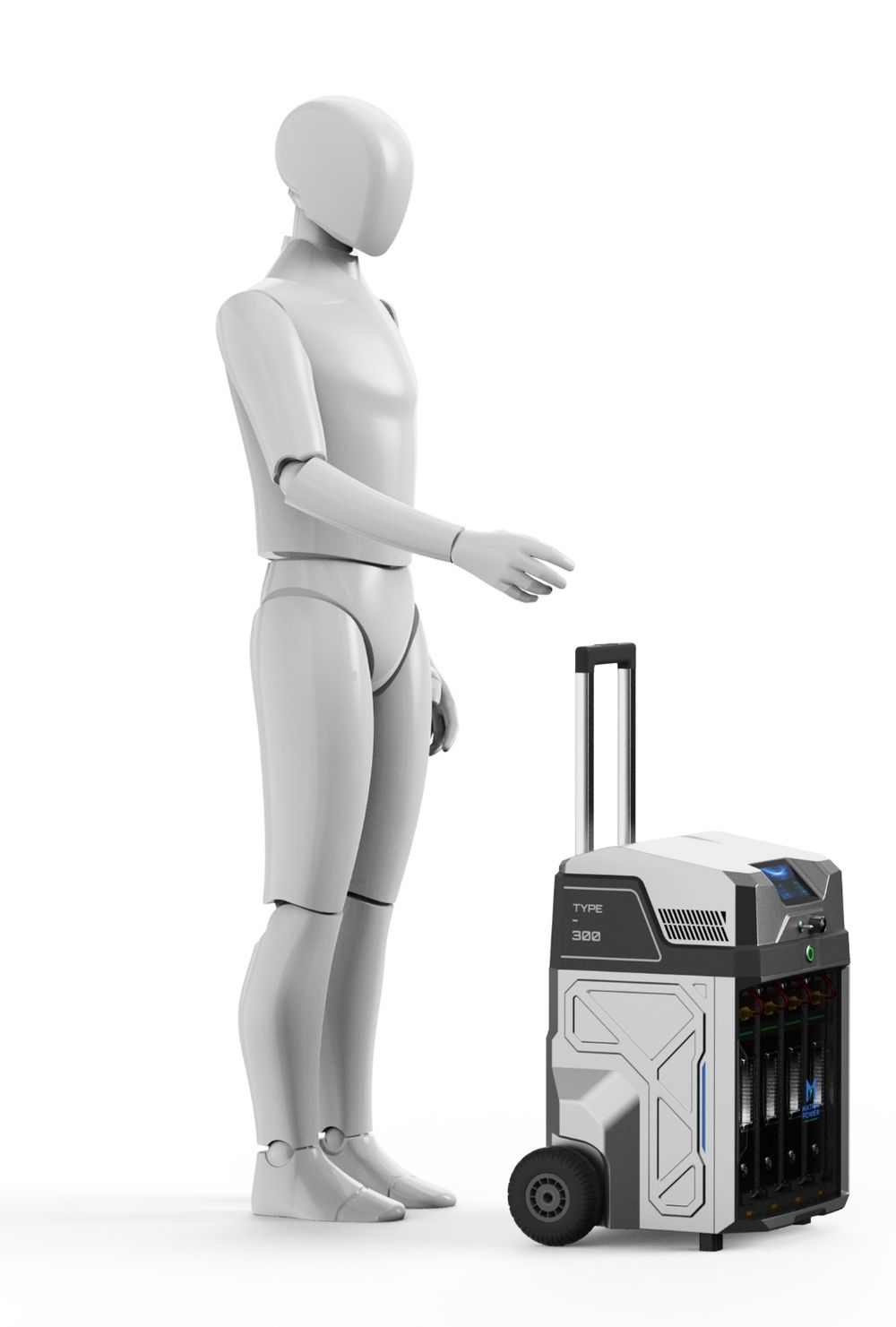
Industrial-design renders, August 2026. Pre-production; the mark shown on the enclosure predates the Solida Power name.
Finish
Four colourways.
Cool Gray 9C with a pearl metallic finish on the top cover, Cool Gray 11C below it, and a translucent PC door so the state-of-charge strips read from across a room. The other three finishes exist for the fleets that need them to.
Why modular matters more than it sounds
The last 30 metres are the hard part.
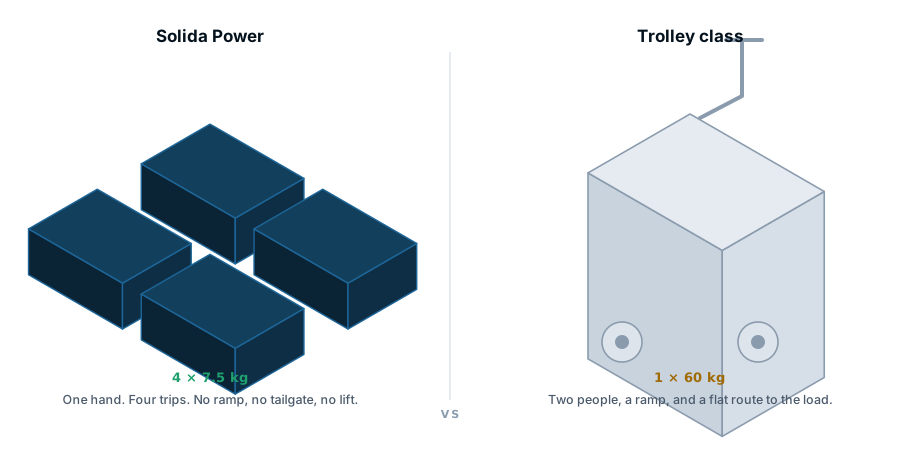
This one has wheels as well, and for the same reason: most of the distance from a van to a load is flat. But wheels stop working at a kerb, a stair, a scaffold, a stage riser, a ploughed field, a flooded basement, or the tailgate of a vehicle without a lift — and every competitor at this energy has nothing else to offer there, because the box does not open.
Splitting the system into 7.5 kg parts means the last 30 metres stop being a logistics problem. It also means one product covers 1.48 kWh to well past 5.9 — you bring the number of modules the job needs rather than buying a second, larger machine.
Beyond four modules. The architecture is not limited to four. Because each module brings its own conversion path, adding energy adds conversion capacity with it — there is no central inverter to outgrow and no shared bus to overload. The 5.9 kWh four-module system is the configuration we are building first, not a ceiling.
Against a generator
Price it against what it replaces.
Compared to a consumer power station this looks expensive. Compared to a diesel generator — fuel, delivery, theft, servicing, permits, noise complaints, operator hours, and in film the cost of a ruined take — it looks cheap.
A portable generator
- Carbon monoxide — roughly 85 deaths a year in the US, spiking after every hurricane
- Cannot be run indoors, in a shelter, in a basement or near an occupied space
- Audible from far enough away to ruin a take, wake a street, or reveal a position
- Fuel to buy, carry, store, stabilise and guard
- Servicing, permits and an operator on some sites
- An engine, so it has an infrared signature and a maintenance schedule
Solida Power
- No combustion, so no exhaust and no carbon monoxide risk at all
- Runs inside the space it powers
- Fanless and passively cooled — no rotating machinery of any kind
- Recharges from grid, vehicle or solar; nothing to store or spill
- No engine hours, no oil, no filters, no fuel system to fail
- Logged kWh delivered, which is what a rental house actually bills against
The full comparison, including the competitors we do not beat →
Design study
Two directions, and the one we took.
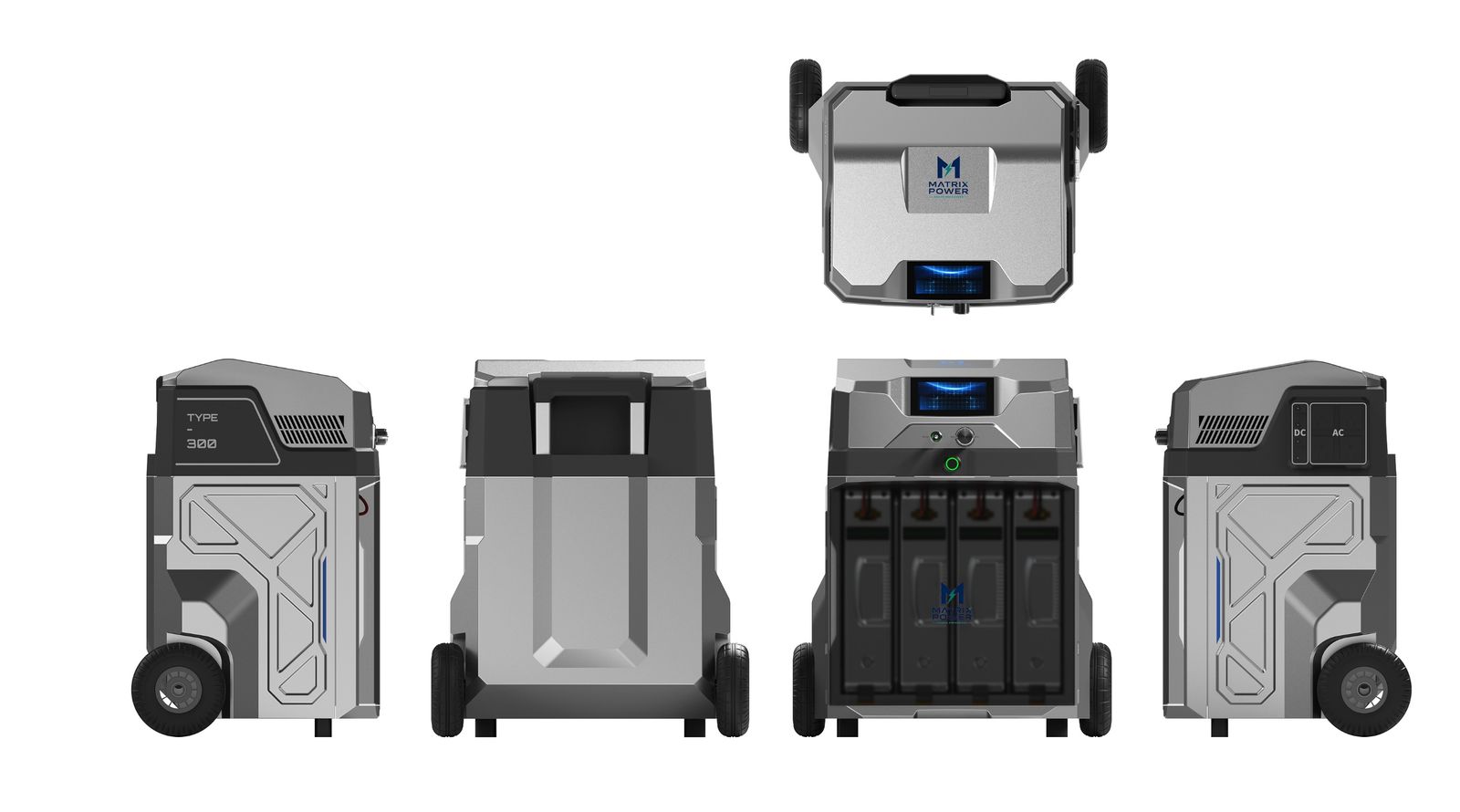
The August 2026 industrial-design study carried two schemes to full render. Both hold four modules behind a door and both put the outputs behind a cover; they differ in where the control head lives, and therefore in how tall the thing is. Scheme B is the reference design.
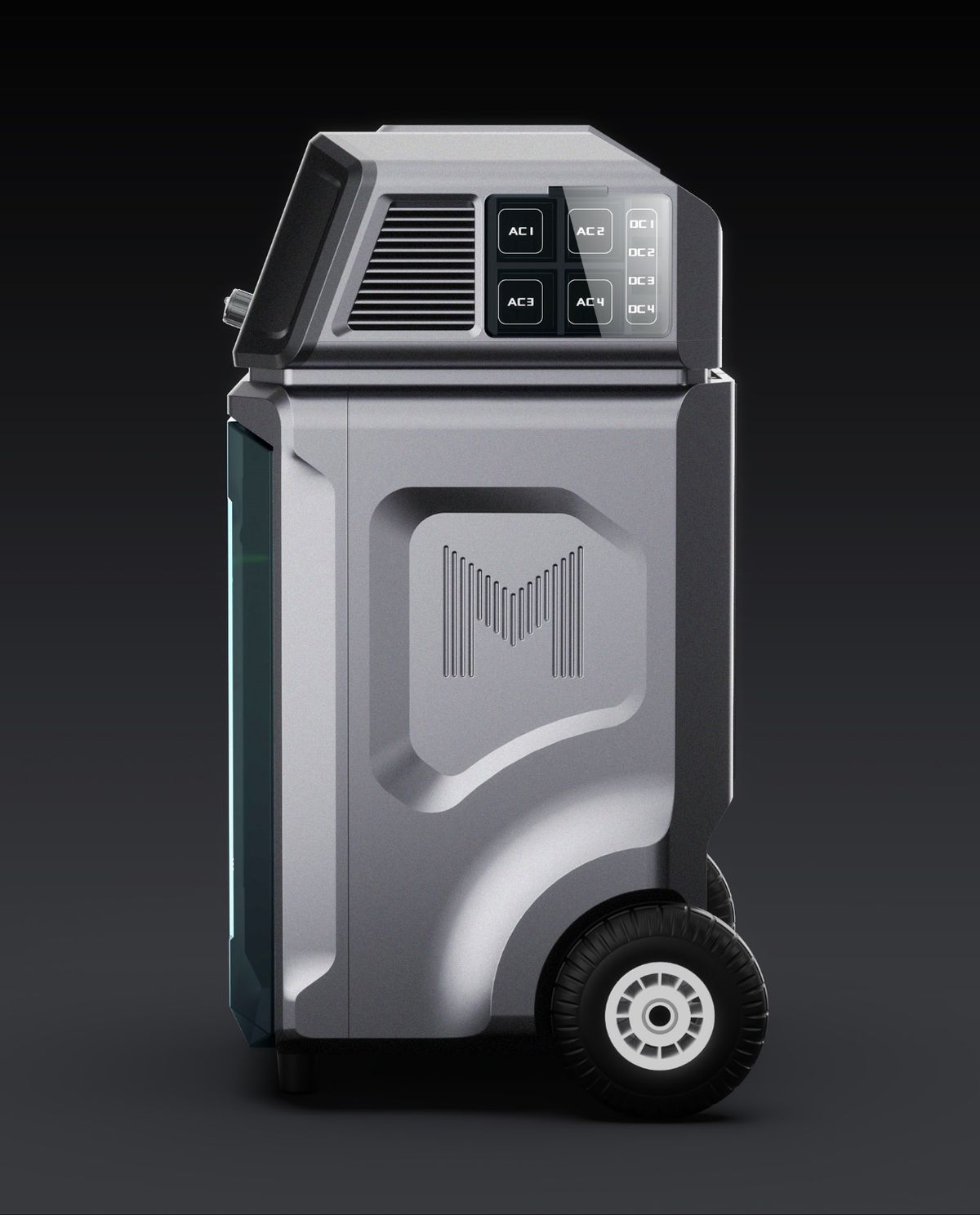
Industrial-design renders, August 2026. Pre-production; the mark shown on the enclosure predates the Solida Power name.
Talk to us
Configure a system for your job.
Tell us the loads, the site and the fleet size. We will tell you honestly whether this is the right product, including when it is not — and whether the job needs one unit or three.