
The situation
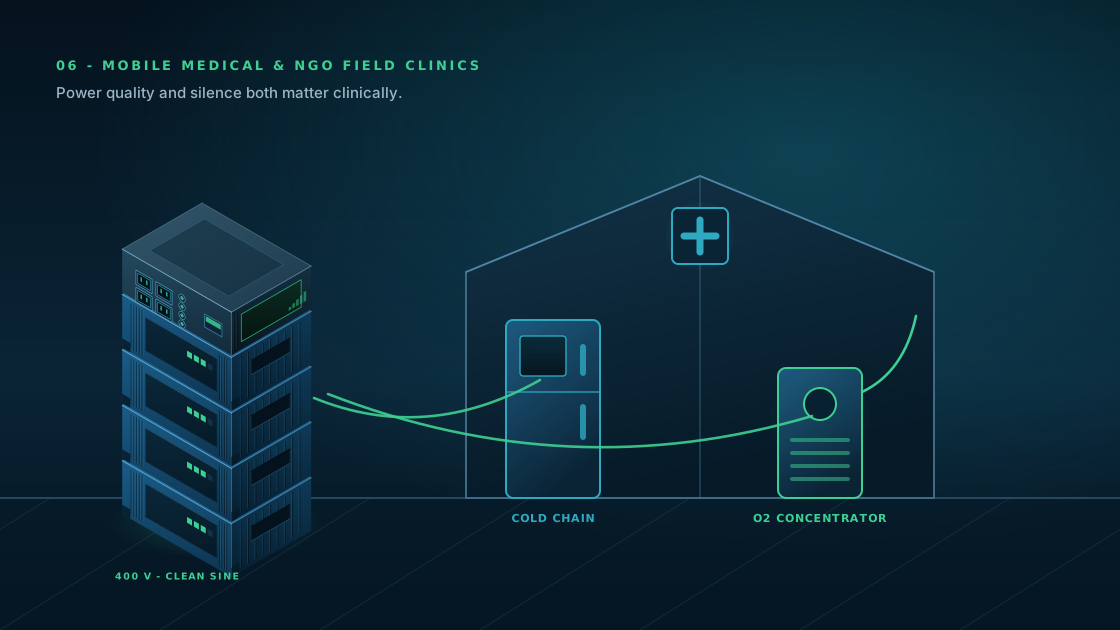
Imaging vans, dental and veterinary units, vaccination drives and field hospitals. The cold chain is the load that cannot be interrupted, and donor-funded buyers purchase in fleets.
A clinic is a quiet room with sensitive equipment in it. Generator noise carries through canvas, and the exhaust has to go somewhere. Away from a grid, the power source becomes part of the clinical environment rather than something parked outside it.
- Buyer
- NGO logistics (MSF, IRC), mobile clinic operators, health ministries
- Replaces
- Field generators, and the fuel and servicing chain behind them
- Buying cycle
- 12–24 months; donor-funded, purchased in fleets
- Where to meet them
- InterAction forum, humanitarian logistics networks
The loads
What one unit runs, and what takes three
These are the loads this vertical actually runs. Most of them are single-phase and a single unit covers them. The three-phase ones are flagged, and they mean a three-unit set — which is a different quote, a different weight and a different conversation, so ask about them early.
- Vaccine and insulin cold chain — the load that cannot be interrupted
- Oxygen concentrators, suction and dialysis, indoors, with no CO risk
- Portable imaging — ultrasound, dental and veterinary X-ray
- Autoclaves and mobile sterilisation for field surgical teams
- Lighting and comms for a clinic that runs after dark
- Water treatment and RO skids serving the same camp
Three-phase takes three units. One unit is a single-phase machine — 6 kW, 5.9 kWh, four AC outlets. Its front panel carries a phase selector, so three units set to phase 1, phase 2 and phase 3 and joined by the combining connector will feed a three-phase load at 6 kW a phase. That is three enclosures, three charge states and roughly 90 kg for about 18 kWh. We say so plainly because an earlier version of this site claimed three-phase came out of a single box, and it does not. The three-unit specification →
Why we are better here
The comparison that decides this job.
What you are living with today
- A generator outside a canvas ward is audible in every consultation
- Exhaust management inside a compound is a real constraint, not a preference
- Fan-cooled packs pull dust and grit through the electronics in exactly these environments
- Fuel resupply into a field site is the most fragile part of the logistics chain
Solida Power in this scenario
- Silent enough to sit inside the ward it powers
- 230 V single-phase from one unit; three units cover a 400 V load such as an RO skid
- Modules carried by hand into sites a trolley cannot reach
- Fault isolation across modules — a single module failure does not drop the cold chain
- Fleet state-of-charge visibility across a deployment through xPowerOS
Going deeper
The certification scope widens here
Powering medical devices pulls IEC 60601 system requirements into your certification scope. That is a real cost and a real schedule item, and it is the main reason this sits in the second tier rather than the first. Scope it before promising delivery into a clinical setting.
Donor funding buys in fleets, slowly
The cycle is longer than film or construction, but the order sizes are larger and the specification, once written, tends to be repeated across programmes.
The honest caveat
Air freight restrictions bite hardest in exactly this vertical, where deployment means flying into a country with a damaged grid. The DG-compliant shipping path is a precondition, not a nice-to-have.
Every scenario page carries one. If we cannot name the weakness in a use case, we do not understand it well enough to sell into it.
Keep reading
Other scenarios
Film, TV & broadcast
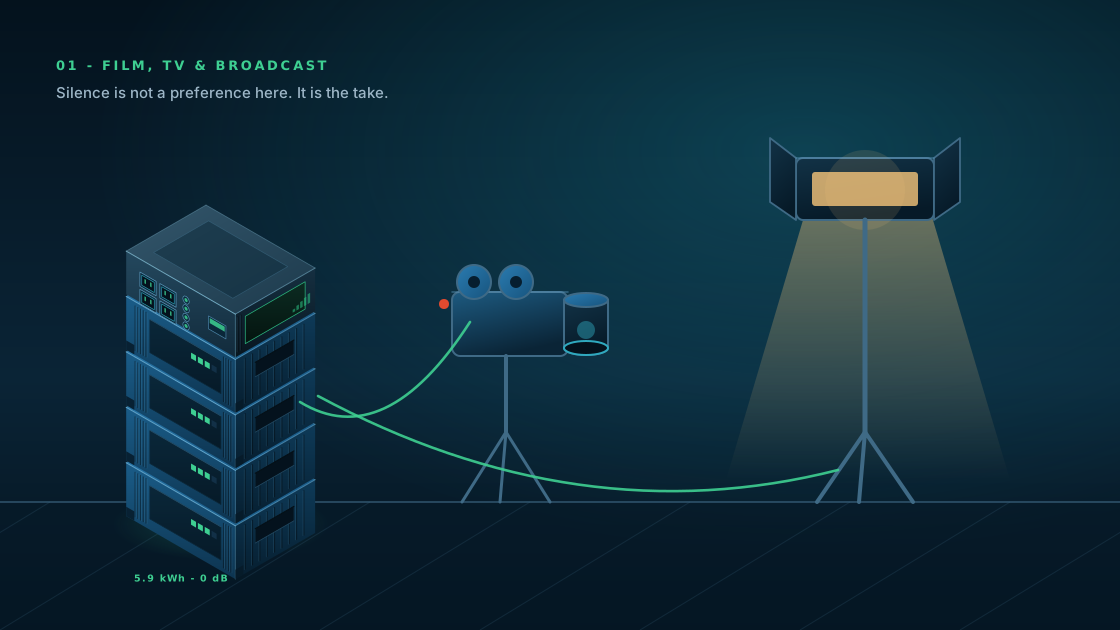
Batteries get placed next to talent, where nothing with an engine can go. 5.9 kWh covers a lighting package for a shift, silently, from a unit a grip can wheel onto the floor.
Read the scenario →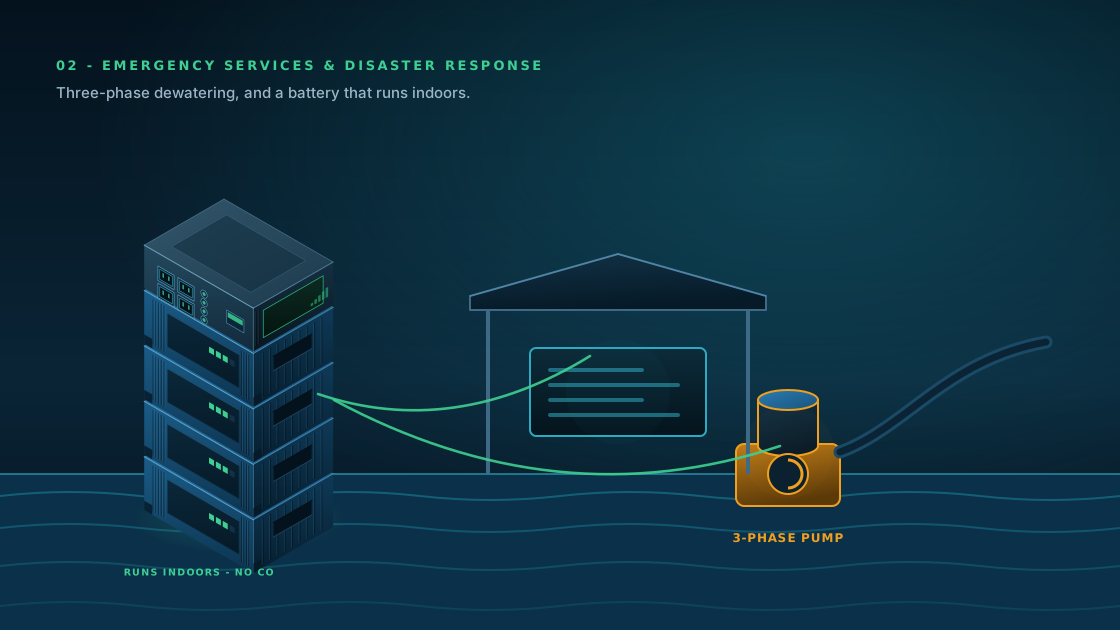
Emergency services & disaster response
Roughly 85 Americans die each year from portable-generator carbon monoxide, and the toll spikes after every hurricane. A fanless battery that runs indoors is a different category of product to a fire chief.
Read the scenario →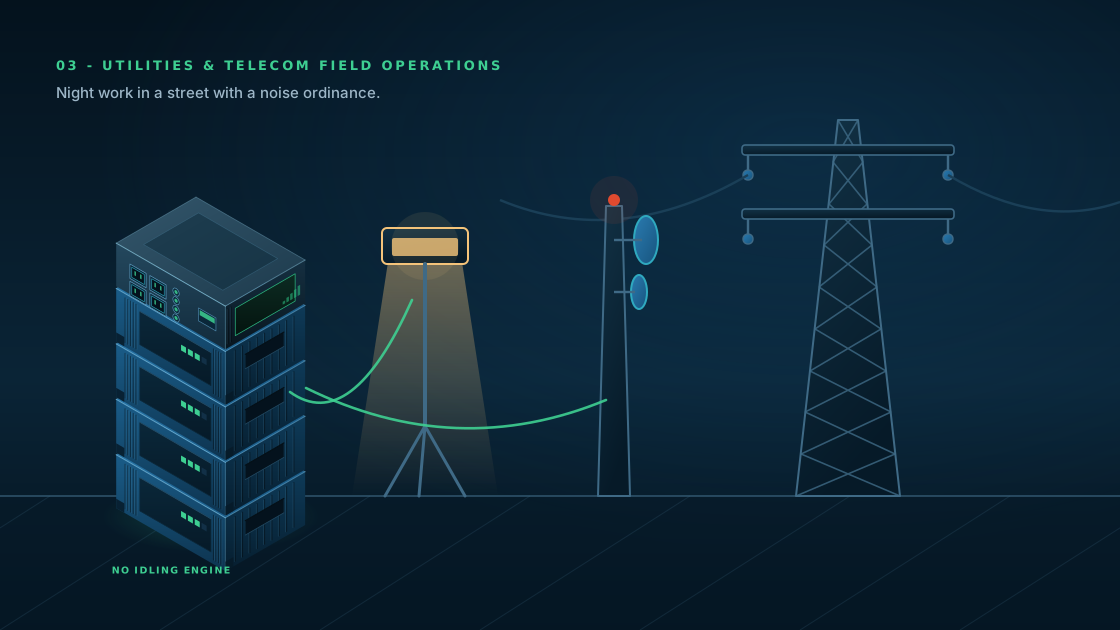
Utilities & telecom field operations
Line crews, substation maintenance, tower service and fibre splicing all run test gear, tools and lighting far from a panel — frequently at night in residential areas where noise ordinances bite.
Read the scenario →Talk to us
Working in medical and ngo?
Tell us the loads and the fleet size. We run instrumented 60-day loaners for serious evaluations — you get your own utilisation data rather than our assumptions.