
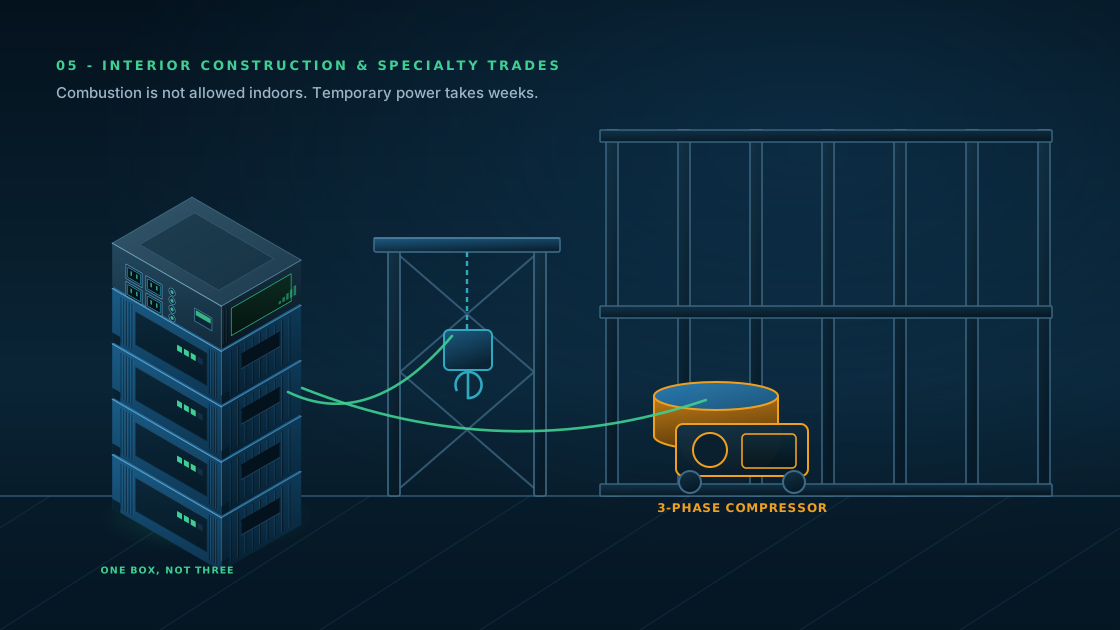
The situation
Fit-out and renovation work where an engine simply cannot run, and a temporary power hookup costs thousands and takes weeks to schedule.
This is instagrid's home ground, so you are the challenger here rather than the incumbent. You win on energy per enclosure — a full shift from one box rather than a swap mid-morning — and on a heaviest carried part of 7.5 kg against their 20.
- Buyer
- Equipment rental chains — United Rentals, Sunbelt, Herc
- Replaces
- Temporary power hookups, and the schedule slip while waiting for one
- Buying cycle
- 3–6 months through the rental channel
- Where to meet them
- The ARA Show, World of Concrete, CONEXPO
The loads
What one unit runs, and what takes three
These are the loads this vertical actually runs. Most of them are single-phase and a single unit covers them. The three-phase ones are flagged, and they mean a three-unit set — which is a different quote, a different weight and a different conversation, so ask about them early.
- Compressors, hoists, augers, mixers and conveyors — single-phase from one unit, three-phase from three
- Welders, plasma cutters, CNC and shop tools away from a panel
- Elevator, escalator and construction-hoist service — underserved, urgent, high-value callouts
- HVAC service — recovery pumps and vacuum rigs
- Core drills and concrete saws on interior work
- Railway maintenance-of-way three-phase track tools
Three-phase takes three units. One unit is a single-phase machine — 6 kW, 5.9 kWh, four AC outlets. Its front panel carries a phase selector, so three units set to phase 1, phase 2 and phase 3 and joined by the combining connector will feed a three-phase load at 6 kW a phase. That is three enclosures, three charge states and roughly 90 kg for about 18 kWh. We say so plainly because an earlier version of this site claimed three-phase came out of a single box, and it does not. The three-unit specification →
Why we are better here
The comparison that decides this job.
What you are living with today
- A temporary power hookup is thousands of dollars and weeks of lead time
- Engines are prohibited indoors, so the alternative is a long extension run to a live panel
- Sub-3 kWh packs need a swap mid-morning, and somebody has to drive the spares to site
- A 60 kg wheeled pack does not go up an unfinished stairwell or onto a scaffold
Solida Power in this scenario
- 5.9 kWh and 6 kW in one enclosure — most of a shift before anything has to be swapped
- A full shift of runtime rather than a swap mid-morning
- Carried up a stairwell in an unfinished building, one 7.5 kg module at a time
- Fanless means no fan pulling gypsum and concrete dust through the electronics
- Rental houses can bill against logged kWh, not against days out
Going deeper
Go through the rental channel, not the contractor
Construction buys through rental. The category managers at United Rentals, Sunbelt and Herc are the actual customers, and the ARA Show is the single highest-density room of these buyers in the world. A contractor who likes the product will tell you to talk to their rental rep anyway.
Where you beat the incumbent, precisely
Do not argue about distributed power electronics — instagrid has shipped that architecture for around six years and will win that argument. Do not argue about three-phase either: they gang three units through a LINK module and so do we. Argue about what one enclosure holds. Theirs is 2.1 kWh and 3.6 kW at 20 kg in one piece; ours is 5.9 kWh and 6 kW at 30 kg that comes apart into 7.5 kg modules a rental customer can hot-swap without shutting the job down.
The honest caveat
Elevator and hoist service is the sub-niche nobody courts and it is worth a dedicated look — urgent callouts, high value, and no incumbent battery vendor calling on them.
Every scenario page carries one. If we cannot name the weakness in a use case, we do not understand it well enough to sell into it.
Keep reading
Other scenarios
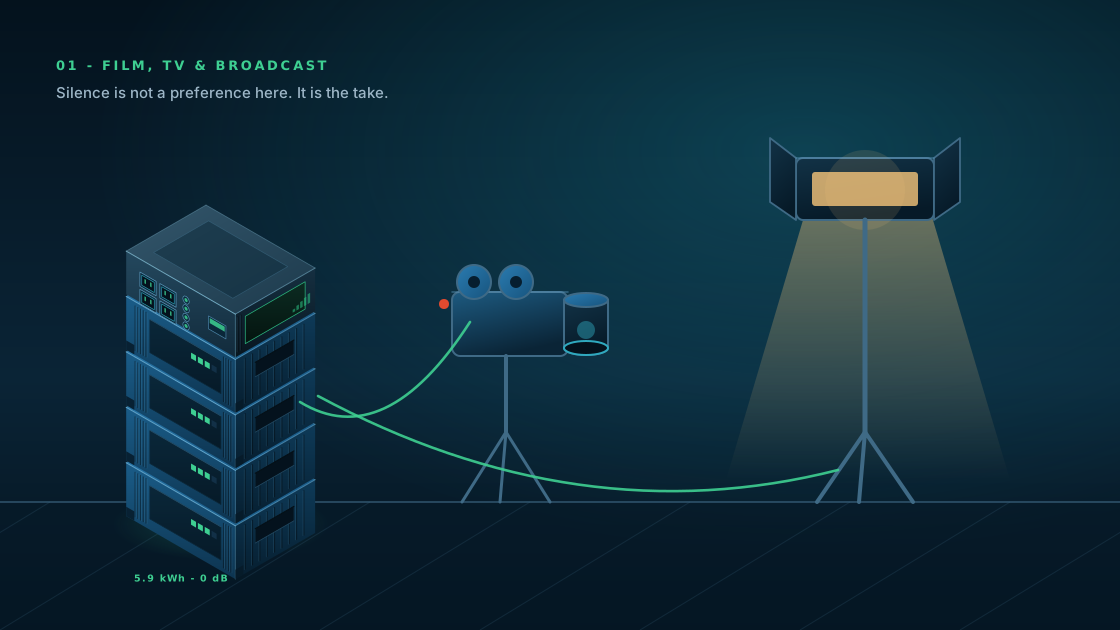
Film, TV & broadcast
Batteries get placed next to talent, where nothing with an engine can go. 5.9 kWh covers a lighting package for a shift, silently, from a unit a grip can wheel onto the floor.
Read the scenario →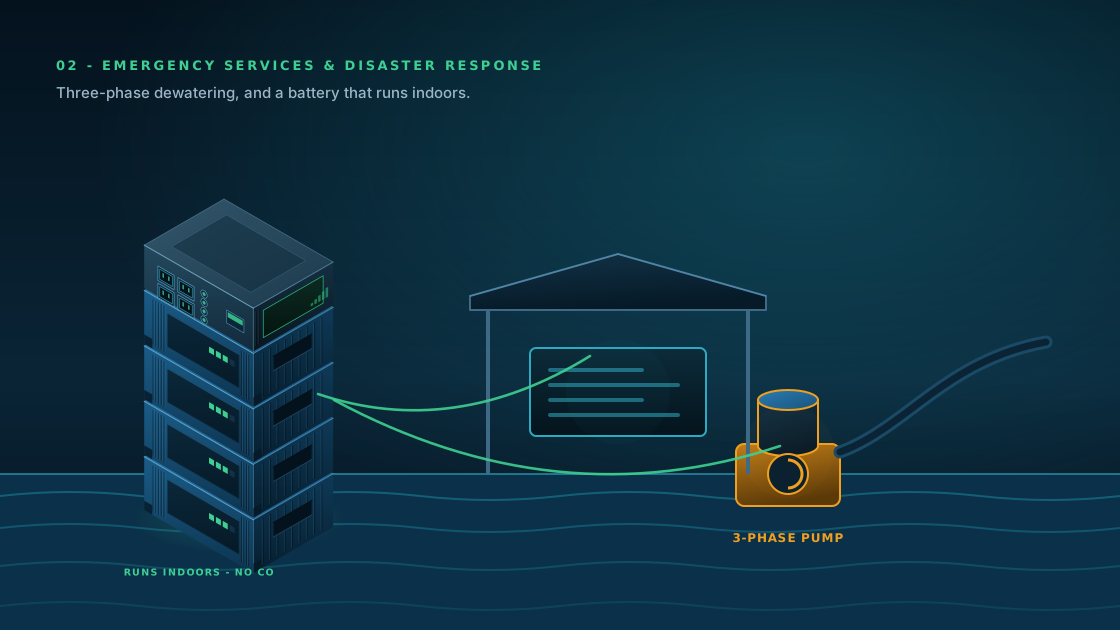
Emergency services & disaster response
Roughly 85 Americans die each year from portable-generator carbon monoxide, and the toll spikes after every hurricane. A fanless battery that runs indoors is a different category of product to a fire chief.
Read the scenario →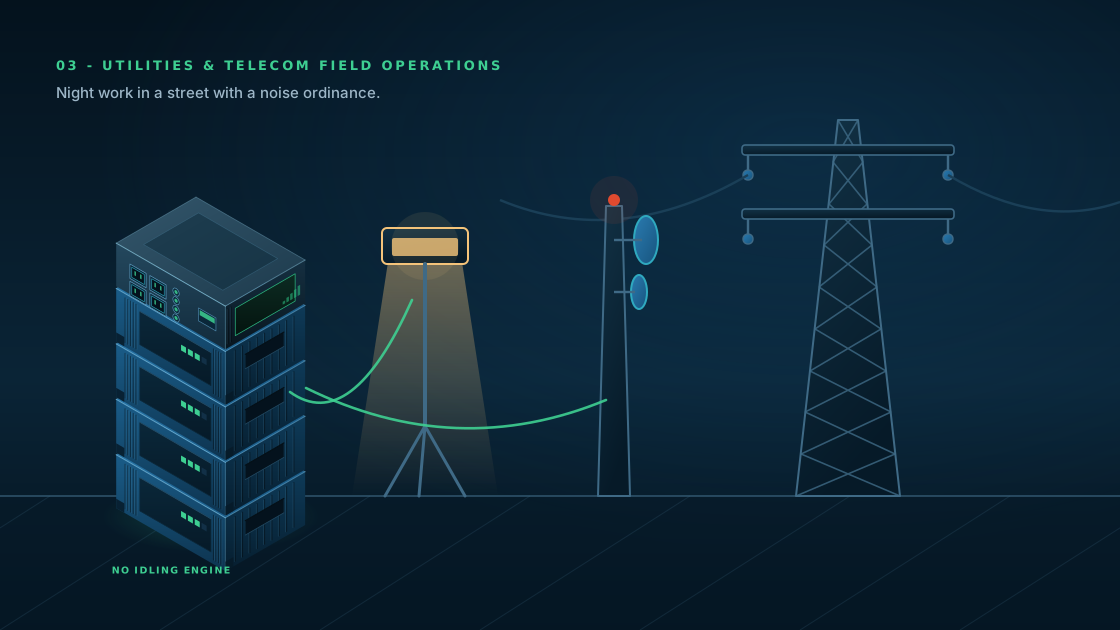
Utilities & telecom field operations
Line crews, substation maintenance, tower service and fibre splicing all run test gear, tools and lighting far from a panel — frequently at night in residential areas where noise ordinances bite.
Read the scenario →Talk to us
Working in construction and trades?
Tell us the loads and the fleet size. We run instrumented 60-day loaners for serious evaluations — you get your own utilisation data rather than our assumptions.